
The kitchen might be the heart of the home, but who says it can’t have a dark, mysterious soul? Gothic kitchen design has evolved far beyond dusty castles and medieval banquet halls. Today’s gothic kitchens blend dramatic aesthetics with modern functionality, creating spaces that are both hauntingly beautiful and perfectly practical.
As an Amazon Associate I earn from qualifying purchases and sometimes recommend products from other sellers at no extra cost you. For more details see my disclosure policy and privacy policy. Posts may contain AI generated images to illustrate the content.
Whether you’re planning a complete kitchen overhaul or looking for subtle ways to add gothic flair to your current space, these ideas will help you create a kitchen that’s both functional and fantastically dark. From budget-friendly accessories to major design elements, let’s explore how to bring authentic gothic ambiance into the most used room of your home.
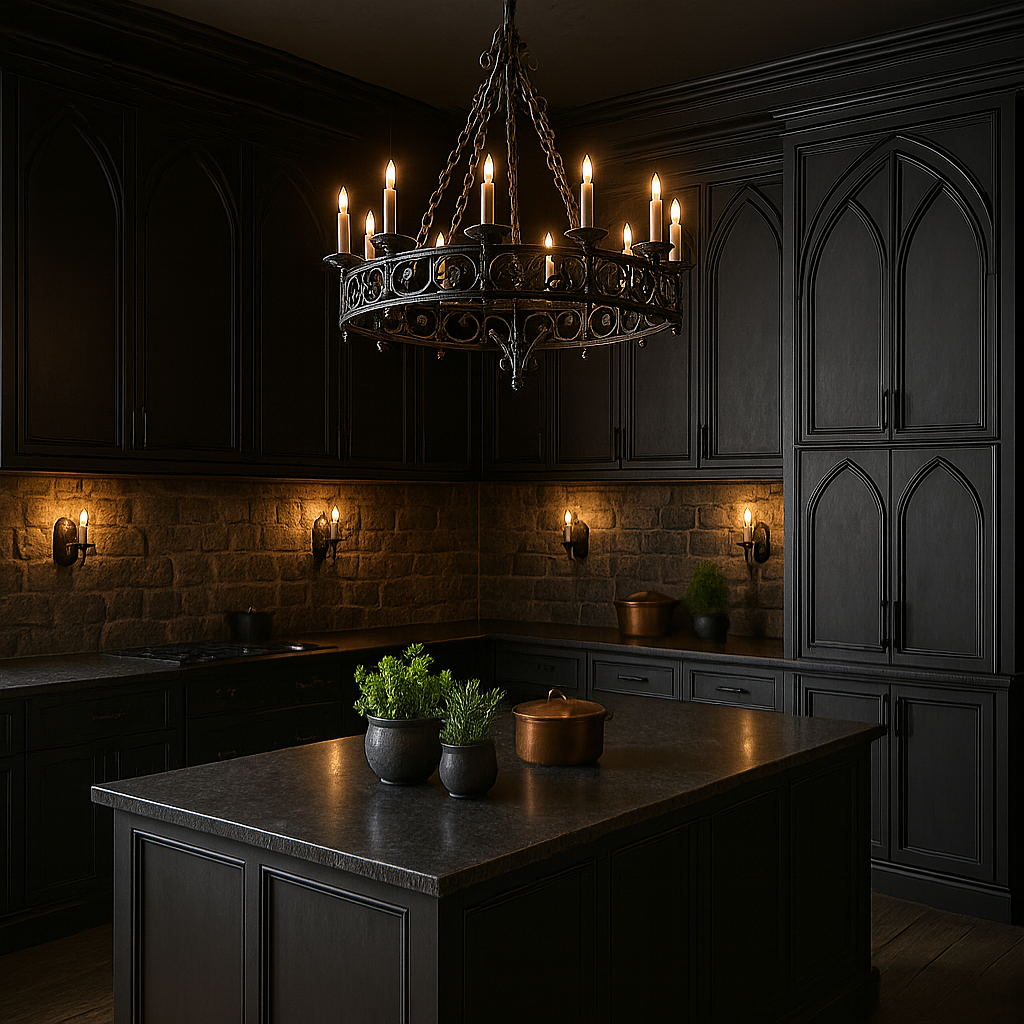
Understanding Gothic Kitchen Aesthetics
Gothic style isn’t just about throwing some black paint on the walls and calling it dramatic. True gothic design draws from centuries of architectural and artistic tradition, emphasizing grandeur, mystery, and intricate details. In kitchen design, this translates to rich textures, dramatic lighting, and carefully chosen materials that work together to create an atmosphere of elegant darkness.
The key to successful gothic kitchen design lies in balance. You want drama without sacrificing functionality, darkness without losing warmth, and grandeur without overwhelming the space. Think of it as creating a room where you’d be equally comfortable brewing your morning coffee or hosting a midnight dinner party.
Midnight Decor
3D printed gothic pieces
Darkly beautiful objects for the gothic home — printed fresh when you order. Each piece is conjured for your space and entirely yours.


Essential Color Palettes for Gothic Kitchens
Deep Dramatic Foundation Colors
Black forms the backbone of most gothic kitchens, but it’s how you use it that makes the difference. Matte black cabinets create a sophisticated, modern gothic look, while glossy black surfaces add glamour and reflect light to prevent the space from feeling cave-like. Consider charcoal or deep graphite as alternatives that provide the same drama with slightly more warmth.
Deep purples, particularly eggplant and burgundy tones, add richness without straying from the gothic palette. These colors work beautifully as accent walls or in textiles and accessories. Rich forest greens and midnight blues can also serve as stunning alternatives to traditional black, offering gothic drama with unexpected sophistication.
Strategic Light Accents
To prevent your gothic kitchen from feeling oppressive, incorporate lighter elements strategically. Cream-colored countertops, antique white tile backsplashes, or silver metallic accents provide necessary contrast while maintaining the overall aesthetic. Even something as simple as white grout between dark tiles can add visual breathing room.
Gray serves as an excellent bridge color between your darkest elements and any lighter accents. From dove gray to deep charcoal, this neutral family offers countless options for creating depth and interest in your gothic kitchen design.
Gothic Kitchen Color Palettes
Dramatic combinations that balance darkness with functionality
Materials and Surfaces That Define Gothic Style
Cabinet Choices That Make a Statement
Dark wood cabinetry remains the gold standard for gothic kitchens. Look for pieces with architectural details like raised panels, carved elements, or gothic arch motifs. Oak, walnut, and mahogany all work beautifully, especially when finished in deep, rich stains that emphasize the wood’s natural grain.
For a more modern gothic approach, consider painted cabinets in deep black or charcoal. Matte finishes feel more contemporary, while distressed or antiqued finishes add vintage gothic charm. Glass-front cabinets with mullioned doors echo cathedral windows and provide display space for gothic-inspired dishware and accessories.

Countertop Materials with Gothic Appeal
Natural stone countertops align perfectly with gothic aesthetics. Black granite with subtle veining, dark soapstone, or even dramatic black marble create stunning work surfaces that feel both luxurious and appropriately moody. These materials also offer excellent durability for busy kitchens.
For budget-conscious renovations, consider butcher block countertops in rich walnut or mahogany. The natural wood grain adds warmth and texture while maintaining the gothic color palette. When properly sealed and maintained, wood countertops can be both practical and beautiful in gothic kitchen settings.
Backsplash Options for Gothic Drama
Your backsplash offers an excellent opportunity to introduce gothic architectural elements. Look for subway tiles in deep colors, natural stone tiles with interesting textures, or even metallic tiles in pewter or bronze tones. Herringbone or chevron patterns add visual interest while maintaining sophistication.
For renters or those wanting easily changeable options, consider peel-and-stick tiles in gothic-appropriate colors and patterns. These temporary solutions can dramatically transform a kitchen’s appearance without permanent alterations.
Lighting: Creating Gothic Ambiance
Statement Lighting Fixtures
Gothic kitchens demand lighting that serves as both illumination and art. The right fixtures can instantly transform an ordinary kitchen into a dramatically beautiful space.
Best Gothic Lighting Options:
- Wrought iron chandeliers with candelabra-style bulbs for kitchen islands or dining areas
- Crystal chandeliers with dark metal frames for elegant Victorian gothic appeal
- Multiple pendant lights in varying heights over countertops and prep areas
- Gothic-inspired glass shades in amber, deep red, or smoky tones
- Fixtures with intricate metalwork featuring gothic arch details or medieval motifs
Ambient and Task Lighting Solutions
Layer your lighting to create the perfect gothic atmosphere. Under-cabinet LED strips provide necessary task lighting while remaining nearly invisible. Choose warm white or even amber-toned LEDs to maintain the cozy, mysterious feeling rather than harsh, clinical brightness.
Wall sconces with gothic detailing add ambient lighting while reinforcing your design theme. Look for fixtures that mimic medieval torches or incorporate gothic architectural elements like pointed arches or trefoil patterns.
Candles remain the ultimate gothic lighting solution. Incorporate candelabras, gothic-style candle holders, and even battery-operated candles in areas where open flames might not be practical. The flickering light adds instant atmosphere and romance to your gothic kitchen.
Functional Gothic Accents and Accessories
Hardware That Makes a Difference
Cabinet hardware offers an easy way to introduce gothic elements without major renovation. The right pulls and knobs can transform ordinary cabinets into gothic masterpieces.
Gothic Hardware Essentials:
- Dark metal finishes: oil-rubbed bronze, blackened iron, or pewter
- Gothic-inspired designs: crosses, fleur-de-lis motifs, or medieval ring pulls
- Ornate backplates with intricate detailing
- Heavy, substantial pieces that feel authentic and quality-made
- Matching sets for faucets, soap dispensers, and other kitchen fixtures
Don’t overlook your faucet and other fixtures. Black or dark bronze faucets have become increasingly popular and work perfectly in gothic kitchens. Pot fillers, soap dispensers, and other kitchen fixtures in matching dark metals create a cohesive, intentional look.
Textiles and Window Treatments
Heavy, dramatic window treatments suit gothic kitchens perfectly. Velvet curtains in deep colors, brocade valances, or even gothic-patterned fabrics can transform ordinary windows into design focal points. If privacy isn’t a concern, consider leaving dramatic windows uncovered to showcase their architectural beauty.
Kitchen textiles like dish towels, pot holders, and table runners offer opportunities to introduce gothic patterns and colors affordably. Look for damask prints, medieval-inspired motifs, or simply rich, dark colors that complement your overall design scheme.
Decorative Elements with Gothic Flair
Strategic decorative elements can reinforce your gothic theme without cluttering your functional workspace. Consider displaying gothic-inspired pottery, wrought iron trivets, or vintage copper pots and pans. These items serve practical purposes while contributing to your kitchen’s aesthetic.
Wall art in gothic kitchens might include framed botanical prints of herbs and dark flowers, vintage culinary advertisements with gothic fonts, or even reproductions of medieval manuscripts. Keep groupings simple and let each piece make its own statement.
If you’re interested in extending your gothic aesthetic throughout your home, you might also enjoy our guide to gothic interiors, which covers living rooms, bedrooms, and other spaces in detail.
Gothic Kitchen Style Variations
Victorian Gothic Elegance
Victorian gothic kitchens emphasize ornate details, rich materials, and formal elegance. Think carved wood details, elaborate hardware, and deep jewel tones like burgundy and forest green. This style works particularly well in homes with existing Victorian architectural elements or those seeking maximum drama and formality.
Incorporate vintage-inspired appliances when possible, or consider appliance panels that hide modern conveniences behind period-appropriate facades. Ornate tilework, detailed crown molding, and elaborate window treatments complete the Victorian gothic look.
Modern Gothic Minimalism
For those who appreciate gothic drama but prefer cleaner lines, modern gothic offers the perfect solution. This approach emphasizes dark colors and dramatic materials while maintaining the simplicity of contemporary design. Think sleek black cabinets, minimal hardware, and statement lighting with clean geometric forms.
Modern gothic kitchens often feature large expanses of dark color broken by strategic metallic accents or natural textures. The result feels dramatic and mysterious while remaining thoroughly contemporary and functional.
Pastel Gothic Kitchen Touches
Pastel gothic brings an unexpected softness to kitchen design while maintaining gothic sensibilities. Consider incorporating soft purples, dusty roses, or sage greens alongside your darker elements. This approach works particularly well for those who want gothic influence without overwhelming darkness.
Pastel gothic kitchens might feature black cabinets with soft purple walls, or charcoal countertops with sage green backsplashes. The key is maintaining the gothic proportion of dark to light while introducing gentler colors for balance.
For more inspiration on incorporating softer gothic elements, check out our post on pastel goth aesthetic outfits, which might spark ideas for your kitchen color palette.
Gothic Cottagecore Kitchens
This emerging style combines gothic darkness with rustic, homey elements. Think dark wood cabinets paired with herbs drying from ceiling beams, black stone countertops topped with vintage crockery, and gothic windows framing cottage gardens. This style appeals to those who want gothic influence with a more approachable, lived-in feeling.
Gothic cottagecore kitchens often incorporate natural elements like exposed wood beams, stone accents, and plenty of plants in dark, gothic-appropriate containers. The result feels both mysterious and welcoming, perfect for those who want their gothic kitchen to feel like a witch’s cozy cottage.
Budget-Friendly Gothic Kitchen Updates
Paint and Hardware Swaps
One of the most cost-effective ways to introduce gothic elements is through paint and hardware updates. These changes can dramatically transform your kitchen’s appearance without breaking the bank.
Affordable Gothic Updates:
- Paint existing cabinets in deep black, charcoal, or dark forest green
- Replace cabinet hardware with gothic-inspired pulls and knobs
- Update light switch plates and outlet covers to dark metals
- Paint an accent wall in deep burgundy or midnight blue
- Use chalkboard paint to create gothic-style menu boards or recipe displays
Painting existing cabinets requires weekend labor but costs only the price of supplies and can completely change your kitchen’s personality. Similarly, swapping out cabinet hardware costs relatively little but makes a significant visual impact throughout the space.
Lighting and Textile Changes
Replacing a standard light fixture with a gothic-inspired chandelier or pendant lights can instantly transform your kitchen’s atmosphere. Many beautiful options are available at various price points, making this an accessible upgrade for most budgets.
Adding gothic-appropriate textiles like dark curtains, atmospheric table runners, or gothic-printed dish towels provides color and pattern while remaining easily changeable as your tastes evolve.
DIY Gothic Decor Projects
Creative DIY projects can add personal gothic touches without significant expense. Consider creating your own gothic-inspired wall art, refinishing thrift store finds in gothic colors and finishes, or crafting decorative elements that reflect your personal interpretation of gothic style.
Upcycling existing items with gothic makeovers can be both economical and satisfying. Old furniture pieces, decorative items, and even appliances can be transformed with appropriate paint, hardware, and creative vision.
Practical Tips for Gothic Kitchen Success
Maintaining Functionality
The most beautiful gothic kitchen is useless if it doesn’t function well for daily cooking and entertaining needs. Balance is key to creating a space that’s both dramatically beautiful and perfectly practical.
Essential Functionality Considerations:
- Ensure adequate task lighting in all work areas, even with moody ambient lighting
- Choose materials that withstand kitchen use and regular cleaning
- Consider how dark colors show fingerprints, water spots, and dust
- Maintain clear sight lines for safety during food preparation
- Plan sufficient storage that remains easily accessible
Consider the practical implications of your color choices. While deep colors are beautiful, they may show dust, fingerprints, or water spots more readily than lighter alternatives. Factor cleaning and maintenance requirements into your material selections.
Balancing Drama with Comfort
Gothic style can be dramatic without being uncomfortable or unwelcoming. Incorporate enough lighting to make the space functional and safe for cooking tasks. Consider the psychological impact of very dark spaces and include enough contrast and visual interest to prevent the room from feeling oppressive.
Temperature considerations matter too. Dark colors absorb heat, which might make your kitchen uncomfortably warm during summer months or when using heat-generating appliances. Ensure adequate ventilation and consider how your color choices might affect the room’s perceived temperature.
Working with Existing Architecture
Your home’s existing architecture will influence how successfully you can implement gothic kitchen design. Homes with already dramatic features like exposed beams, arched doorways, or tall ceilings naturally lend themselves to gothic styling. More modest or contemporary homes may require creative approaches to introduce gothic elements successfully.
Don’t fight your home’s natural character. Instead, find ways to incorporate gothic elements that complement rather than clash with existing architectural features. Sometimes the most successful gothic kitchens are those that work with, rather than against, their architectural context.
For those dealing with smaller spaces, you might find inspiration in our black gothic bedroom post, which offers ideas for creating dramatic impact in compact areas.
Seasonal Gothic Kitchen Styling
Year-Round Gothic Elements
Your gothic kitchen’s foundation should remain constant throughout the year, but seasonal styling can keep the space feeling fresh and connected to the changing seasons. Core elements like cabinet colors, major fixtures, and primary materials form the unchanging backdrop for seasonal decorative changes.
Focus seasonal updates on easily changeable elements like textiles, decorative accessories, and even scents. This approach allows you to embrace gothic aesthetics while still enjoying seasonal variety and celebrating different times of year.
Autumn and Halloween Enhancement
Fall naturally lends itself to gothic styling, making this the perfect time to fully embrace your kitchen’s dark side. Add seasonal elements like gothic pumpkins, dark autumn foliage, and Halloween-appropriate decorations that complement rather than compete with your year-round design.
Consider incorporating seasonal scents through candles or diffusers. Autumn fragrances like cinnamon, clove, and woodsmoke naturally complement gothic aesthetics while making your kitchen feel seasonally appropriate.
Our outdoor Halloween decor post offers ideas that could be adapted for indoor gothic kitchen styling during the Halloween season.
Winter Gothic Warmth
Winter months call for enhancing the cozy aspects of your gothic kitchen while maintaining its dramatic character. Add extra candles for warmth and ambiance, incorporate rich textures through table runners or placemats, and consider seasonal greenery that maintains the gothic color palette.
Dark evergreen arrangements, burgundy holly, or even bare branches in gothic-appropriate vases can add seasonal interest while complementing your kitchen’s existing aesthetic.
Bringing It All Together
Creating a gothic kitchen that actually works requires thoughtful planning, careful material selection, and attention to both aesthetic and functional requirements. The most successful gothic kitchens are those that feel authentic to their owners’ lifestyles while embracing the drama and mystery that makes gothic design so appealing.
Remember that gothic style is ultimately about creating atmosphere and expressing personality through design choices. Your gothic kitchen should reflect your individual interpretation of gothic aesthetics while serving your practical needs for cooking, entertaining, and daily life.
Start with the elements that will make the biggest impact—usually cabinets, countertops, and lighting—then layer in accessories and decorative elements that reinforce your chosen gothic style. Don’t feel pressured to implement every idea at once; gothic kitchens can evolve over time as your vision develops and your budget allows.
Whether you’re drawn to the ornate elegance of Victorian gothic, the clean lines of modern gothic, or the cozy appeal of gothic cottagecore, there’s a version of gothic kitchen design that will work beautifully in your home. The key is staying true to the gothic principles of drama, mystery, and sophisticated darkness while adapting them to create a space that’s uniquely yours.
For more gothic home inspiration, explore our complete guide to gothic fashion to see how your personal style might influence your interior design choices, or check out our gothic bathroom ideas for extending your dark aesthetic throughout your home.
