If you dress this way every day, your shoes do the heavy lifting. They carry you through commutes, offices, gigs and the occasional cobbled street, and they either hold up or they quietly ruin your week. This guide is for people who wear gothic footwear as part of daily life, not as a seasonal costume.
As an Amazon Associate I earn from qualifying purchases and sometimes recommend products from other sellers at no extra cost you. For more details see my disclosure policy and privacy policy. Posts may contain AI generated images to illustrate the content.
We will cover the core styles, what they are made from, how they should fit, and how to look after them so the good pairs last for years.
🖤 The Core Gothic Boot Styles
Gothic footwear is a broad church, but most pairs fall into a handful of families. Knowing which one you are actually shopping for makes the rest of the decision far easier.
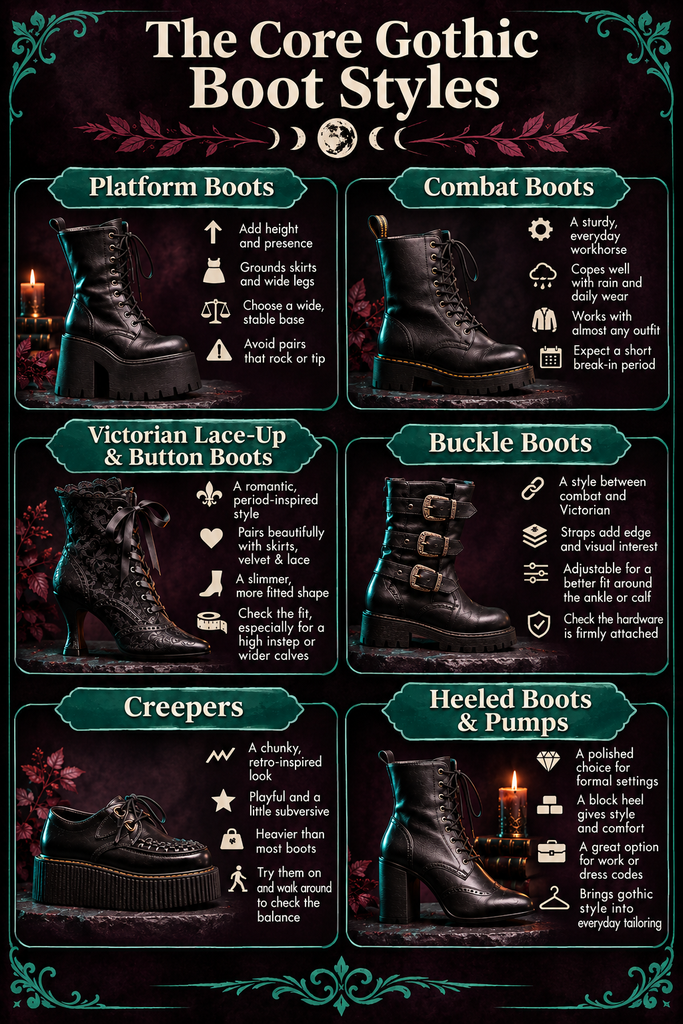
Platform Boots
Platforms are the signature silhouette for many people, and for good reason. They add height, they ground a long skirt or wide-leg trouser, and they give an outfit instant weight.
Midnight Decor
3D printed gothic pieces
Darkly beautiful objects for the gothic home — printed fresh when you order. Each piece is conjured for your space and entirely yours.


The trade-off is stability. A good platform has a wide, flat base and a sole that stays level when you walk. A bad one rocks, pinches or tips you forward.
Combat Boots
Combat boots are the workhorse of the genre. Lace-up, sturdy, and happy in rain, they are the pair most people reach for on a Tuesday.
They suit nearly everything: jeans, tulle, tailoring, pleated skirts. They also tend to be the easiest style to find in a wide range of sizes and widths.
Expect a break-in period. Leather versions especially need a few weeks of shorter wears before they feel like yours.
Victorian Lace-Up and Button Boots
These are the romantic end of the spectrum. A fitted ankle, a slim heel and a row of eyelets or buttons give a distinctly period silhouette.
They pair beautifully with long skirts, velvet and lace, and they read as elegant rather than aggressive. They are also the style most likely to be sensitive to fit, because a slim last leaves less room for error.
If you have a high instep or wider calves, check the opening carefully before you commit. Lacing that starts higher up usually gives you more adjustment.
Buckle Boots
Buckle boots sit between combat and Victorian. The straps and hardware give a harder edge, and they can add visual interest to a plain outfit without any other accessories.
Buckles are also functional, since they let you adjust the fit around the ankle or calf. That makes them a useful option if your leg shape does not suit a standard lace-up.
Check that the hardware is firmly attached, because cheap buckles are usually the first thing to fail. If you enjoy this look, our guide to gothic belts and corset accessories shows how to echo the hardware in the rest of your outfit.
Creepers
Creepers have a thick, crepe-style or rubberised sole and a chunky, slightly retro profile. They are playful, a little subversive, and very much their own category.
They are heavier than most boots, so try them on and walk around before you buy. The sole can make them feel clunky if the weight is not balanced well.
Heeled Boots and Pumps
For formal settings, a heeled boot or a pointed pump gives you polish without breaking the dark palette. A block heel is far kinder to the foot than a stiletto and still looks sharp.
If you work somewhere with a dress code, this is the family to lean on. It is also where the gothic wardrobe meets everyday tailoring, which our ultimate guide to gothic clothing styles covers in more depth.
🕯️ Materials and Construction: What Actually Lasts
Two boots can look identical in a photo and behave completely differently after six months. The difference is almost always in the materials and how the boot is put together.
Leather vs Vegan Leather
Full-grain and top-grain leather usually mould to your foot over time and can be conditioned, repaired and resoled. They tend to cost more, and they do need care.
Vegan leather, often made from polyurethane-based materials, is a good choice if you avoid animal products. Quality varies enormously, and the coating on cheaper pairs can crack or peel at the flex points with heavy use.
The practical advice is the same for both. Press the material at the toe box and ankle, and look for a finish that bends rather than creases sharply. If a pair has a lining, check that it is not rough at the heel, since that is where blisters begin.
Soles
The sole decides how the boot walks, how long it lasts and whether it can be repaired. Rubber and crepe soles grip well and absorb some impact. Thin synthetic soles can wear through quickly.
If you want a pair for years, look for a stitched or welted construction, because a cobbler can replace the sole. Glued soles can sometimes be redone, but it depends on the boot.
Platform Stability
A platform should feel level under your foot, not like a wedge that is fighting you. Test it by standing on a hard floor and rocking gently from heel to toe.
If the sole flexes in the wrong place or the base feels narrow compared with the height, put them back. A beautiful boot you cannot walk in is just an expensive ornament.
Hardware and Zips
Zips, buckles and eyelets are the small parts that fail first. Metal hardware that is firmly set generally outlasts painted plastic, and a zip that sticks in the shop will not improve at home.
Pull each one a few times before you buy, and check the stitching around the anchor points.
👣 Fit and Comfort: Getting It Right
Fit is where most gothic footwear regrets begin. A boot that photographs well but pinches by lunchtime will sit in the cupboard.
Sizing Tips
Sizing varies between makers, so treat your usual size as a starting point rather than a promise. Measure your foot at the end of the day, when it is at its widest.
Read the size notes on the listing. If reviews mention that a style runs small or narrow, believe them. Wide-fit and extended-calf options exist from a number of makers, and it is worth searching for them directly rather than squeezing into a standard fit.
If you are between sizes, think about the socks you will wear. Chunky socks in winter need more room than the thin ones you try boots on with in summer.
Breaking Them In
Even a well-made leather boot needs a little patience. Wear them for an hour or two at home first, then short outings, before you commit to a full day.
Use socks you would normally wear with them. If a particular spot rubs, address it early with a patch of moleskin or a stretching spray rather than pushing through.
Some stiffness is normal. Sharp pain, numbness or a heel that slips constantly is a sign the fit is wrong, and no amount of breaking in will fix that.
Walking in Platforms All Day
Platforms are very wearable once you give your body time to adjust. Start with a lower height and shorter distances, and keep your stride a little more deliberate than usual.
Check the stairs and kerbs on your regular route. If your commute involves lots of steps, a combat boot or a low block heel may be the smarter daily choice, with platforms saved for evenings.
A cushioned insole can help with longer days. Choose one that fits your boot without crowding the toes.
🖤 What to Wear Them With
Gothic boots are one of the most flexible parts of the wardrobe. The same pair can look quite different depending on what sits above it.
Everyday Looks
Combat boots with black skinny jeans and an oversized knit are a reliable foundation. Swap the jeans for a pleated midi skirt and you have a softer version of the same outfit.
Platforms work well with wide-leg trousers, which hide the height and make the line from waist to floor look longer. Creepers shine with cropped trousers or a short skirt and patterned tights.
Office-Friendly Options
A plain black heeled boot or a sleek Victorian-style ankle boot passes in almost any workplace. Pair with tailored trousers or a knee-length skirt and keep the hardware minimal.
Formal and Event Wear
For weddings, funerals and formal evenings, a heeled boot with a velvet or lace dress makes the dark palette feel deliberate. Our guide to gothic wedding attire for guests has more outfit ideas for those occasions.
Weather and Season
Winter calls for something with a good sole and a lined or well-sealed upper. Our gothic rain gear guide covers the accessories that keep a dark outfit looking sharp in bad weather, and the goth winter outfits guide shows how to layer around boots.
🧴 Care and Maintenance
Good boots repay a little regular attention.
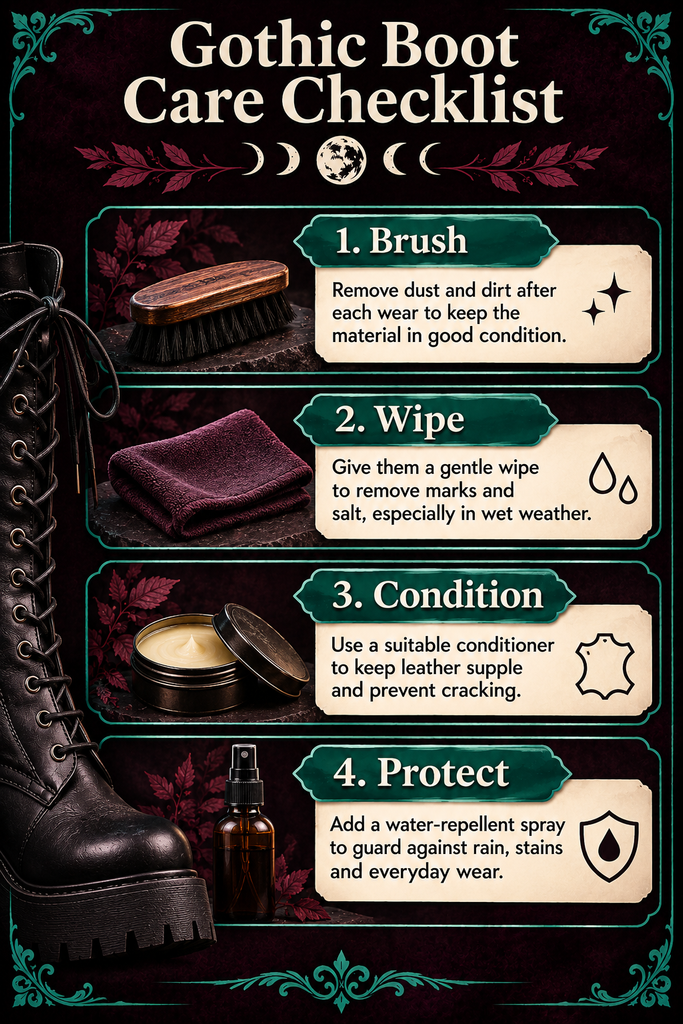
Cleaning
Brush off dust and dirt first, then wipe leather with a slightly damp cloth. Let them dry naturally, away from direct heat, because radiators can dry leather out and cause cracking.
For vegan leather, a damp cloth and a mild soap solution is usually enough. Avoid harsh solvents, which can damage the coating.
Conditioning
Leather benefits from regular conditioning, especially at the flex points around the ankle and toe. A good conditioning balm for leather keeps the surface supple and helps black leather keep its depth of colour.
Apply a thin layer with a soft cloth, leave it to absorb, then buff lightly. Test on a hidden spot first if you are unsure how your boots will react.
Waterproofing
A protective spray helps keep rain from marking leather and suede. Apply it to clean, dry boots, and reapply as the manufacturer recommends.
Resoling and Repairs
If the uppers are still sound and the sole is worn, a cobbler can often give a boot a second life. This is much more likely with stitched or welted constructions.
It is also worth replacing laces, re-gluing a lifting sole edge or swapping a broken buckle early, before a small fault becomes a big one. Boots that are looked after in this way can easily outlast several pairs of cheaper replacements.
🎩 Men’s Picks
Gothic footwear works just as well for men, and the same principles apply: good fit, sound construction and a sole that matches how you actually live.
The most useful men’s styles are combat boots, buckle boots and plain black leather Chelsea or lace-up boots. They sit comfortably alongside the looks above and share the same care routine.
Platforms and creepers have a strong following among men too, particularly with tailored black trousers. If you are dressing for an occasion, our gothic wedding guest guide for men shows how footwear fits into a full outfit.
💷 Choosing by Budget and Occasion
You do not need to buy everything at once. Most people build a footwear collection one dependable pair at a time.
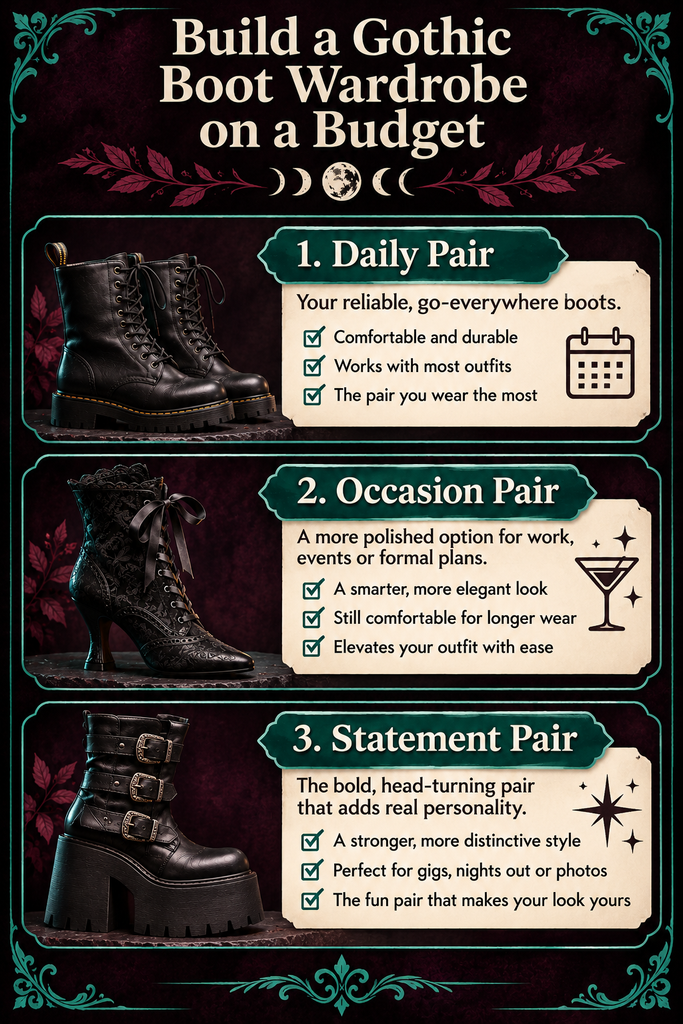
Start with the Daily Pair
If you can only buy one, make it a black lace-up boot in smooth leather or good-quality vegan leather. It will work with nearly every outfit in your wardrobe and take the most wear.
Add an Occasion Pair
Once the daily pair is sorted, add something for dressier moments. A heeled Victorian-style boot or a polished block heel is ideal.
Add a Statement Pair
Platforms, creepers and buckle styles are where you can have fun. Because they are not your everyday workhorse, you can be a little more adventurous with the shape and detail.
A Quick Decision Guide
Use this as a rough map when you are shopping:
- Daily wear and wet weather: combat boots or sturdy lace-ups
- Office and formal settings: heeled boots or sleek Victorian-style ankle boots
- Statement and nightlife: platforms, creepers or buckle boots
- Long walking days: a lower platform or a block heel, with a supportive insole
🖤 Final Thoughts
The best gothic footwear is the pair that you reach for without thinking. It fits well, it feels good enough to wear for hours, and it makes the rest of your outfit look intentional.
Start with the style that suits your daily life, pay attention to materials and construction, and look after what you buy. If you want to build the rest of the look, our guide to gothic accessories and the gothic bags and handbags guide are good next stops.