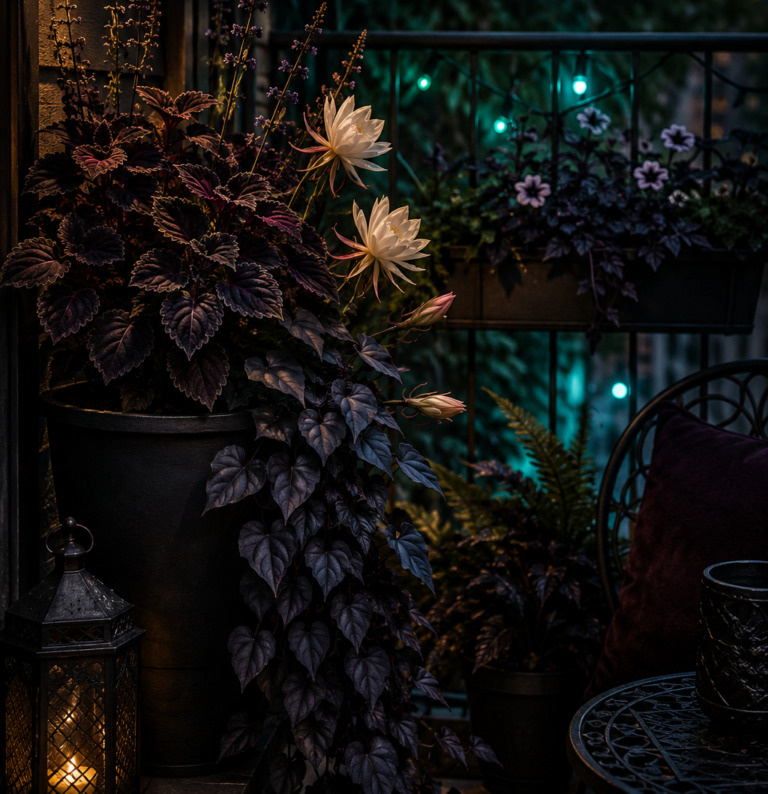
Renting doesn’t have to mean living in beige purgatory until you own a place. It does mean every decision has to answer one question before it gets anywhere near your walls: will this get my deposit back?
As an Amazon Associate I earn from qualifying purchases and sometimes recommend products from other sellers at no extra cost you. For more details see my disclosure policy and privacy policy. Posts may contain AI generated images to illustrate the content.
That’s the filter this guide runs everything through. Not “is it gothic enough,” not “will my landlord like it” (they won’t see it, that’s the point), but specifically: is this reversible. Every idea below leaves your rental exactly as you found it, minus the wear a tenant is expected to cause anyway.
🖤 Start With the Walls, Without Touching Them
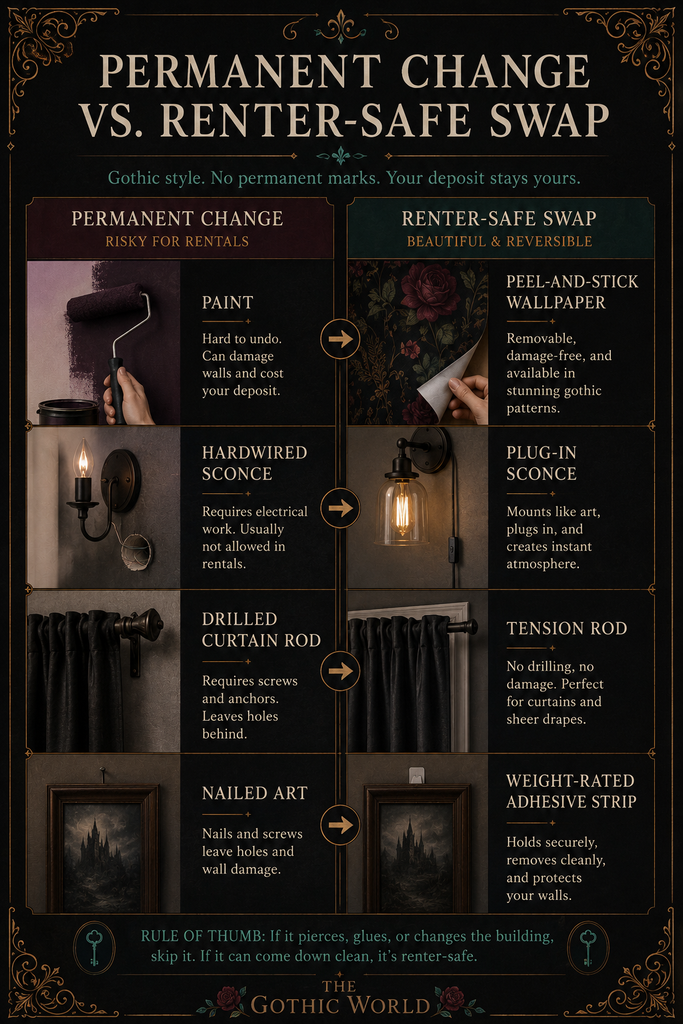
Paint and wallpaper glue are the two fastest ways to lose a deposit, so they’re off the table entirely. Peel-and-stick wallpaper isn’t a compromise here, it’s the better tool for the job. Damask prints, botanical silhouettes, ornate Victorian patterns: all available in removable form, all designed to come off clean when your lease ends.
A dark floral peel-and-stick wallpaper on a single accent wall does more for a room’s atmosphere than almost anything else on this list, and it’s the one change most likely to make a rental feel genuinely yours the moment you walk in. Test a small section in an inconspicuous spot first (behind a door, inside a closet) to confirm it lifts cleanly off your specific wall finish before committing to a full wall.
Midnight Decor
3D printed gothic pieces
Darkly beautiful objects for the gothic home — printed fresh when you order. Each piece is conjured for your space and entirely yours.


If your rental has textured or heavily painted walls where adhesive products struggle, skip this step and lean harder into textiles and furniture instead, both covered below.
🕯️ Layer In Light Without an Electrician
Hardwired fixtures are usually locked behind a “no electrical work” clause, but lighting is still one of the most effective mood-setting tools you have. Plug-in wall sconces solve this directly. They mount with the same renter-safe hardware you’d use for a picture frame and route their cord along the baseboard rather than through the wall.
Statement lamps do a lot of the same work with zero installation at all. A single dramatic floor lamp in the corner of a reading nook, paired with warm-toned bulbs, changes a room’s temperature more than most people expect. String lighting, tucked along a shelf or draped behind a headboard, fills in the gaps without competing with your main light source.
Layer two or three of these together rather than relying on one. Gothic interiors read as atmospheric because of contrast, some areas dim, others glowing, not because every corner is lit the same way.
🪞 Let Furniture Do the Heavy Lifting
Built-ins and wall-mounted units aren’t available to you as a renter, but freestanding furniture can do almost everything they do. A tall bookshelf or armoire creates the kind of imposing, gothic-library presence that a wall-mounted shelf never quite manages, and it moves with you.
Room dividers are underused in this context. A folding screen, ideally something with dark wood or wrought-iron detailing, can section off a reading corner or hide a less-than-gothic HVAC unit without a single tool. It’s also one of the few genuinely large-scale changes you can make that requires zero landlord approval.
For the wall you can’t hang anything heavy on, an ornate mirror leaned against it, rather than hung, is a classic dark-academia trick that adds height and drama without touching the drywall.
🧵 Textiles Are Your Real Budget-Friendly Weapon
If you take nothing else from this guide, take this: textiles carry more of a gothic room’s mood than any single decor object. Heavy curtains, velvet throws, richly patterned rugs, and dark bed dressing are all fully portable, fully reversible, and genuinely inexpensive relative to the impact they have.
Layer a deep-toned throw over a plain rental sofa. Swap the standard-issue white bedding for something in burgundy, black, or deep plum. Add a rug with an ornate border to ground a room that otherwise has generic beige carpet. None of this requires permission, and all of it packs into two boxes when you move.
For a full room built around this textile-first approach, our guide to romantic gothic bedroom transformations leans almost entirely on bedding, drapery, and layered textiles rather than structural changes, which makes it a useful template for renters specifically.
📌 Hang Things Without Losing Your Deposit
Art, mirrors, and curtain rods are usually where renters get nervous, understandably, since a badly placed nail hole is the one mistake that’s genuinely hard to undo. The fix is being deliberate about hardware rather than avoiding wall decor altogether.
Weight-rated adhesive strips (check the rated capacity against your actual frame weight, not just the package’s largest claim) handle most framed art and lightweight mirrors cleanly. Tension rods are the better choice for curtains specifically, since they wedge inside the window frame rather than screwing into it, and they hold surprisingly heavy drapery when sized correctly. Adhesive hooks fill in the gaps for lighter items like string lights or small hanging plants.
Test every adhesive product on a hidden patch of wall first. Some rental paint finishes, particularly newer eggshell or satin coats, respond differently to adhesive removal than a standard matte finish does.
It’s also worth checking your lease itself before you start, some agreements explicitly allow a small number of nail holes for standard picture-hanging, which changes your options considerably. When in doubt, the adhesive-first approach is the safer default, since it works regardless of what your specific lease says.
✅ The Reversibility Checklist
Before committing to any change in this guide, it’s worth running through a short checklist:
- Can this come off or come out in under ten minutes, with no tools beyond your hands?
- Does it leave a mark, residue, or hole that wasn’t there before?
- Have you tested it on a hidden section of the actual surface, not just “products like this usually work”?
- If it’s a hanging solution, is it rated for the actual weight of what you’re hanging, not an estimate?
- Would you be comfortable with your landlord seeing exactly how it was installed?
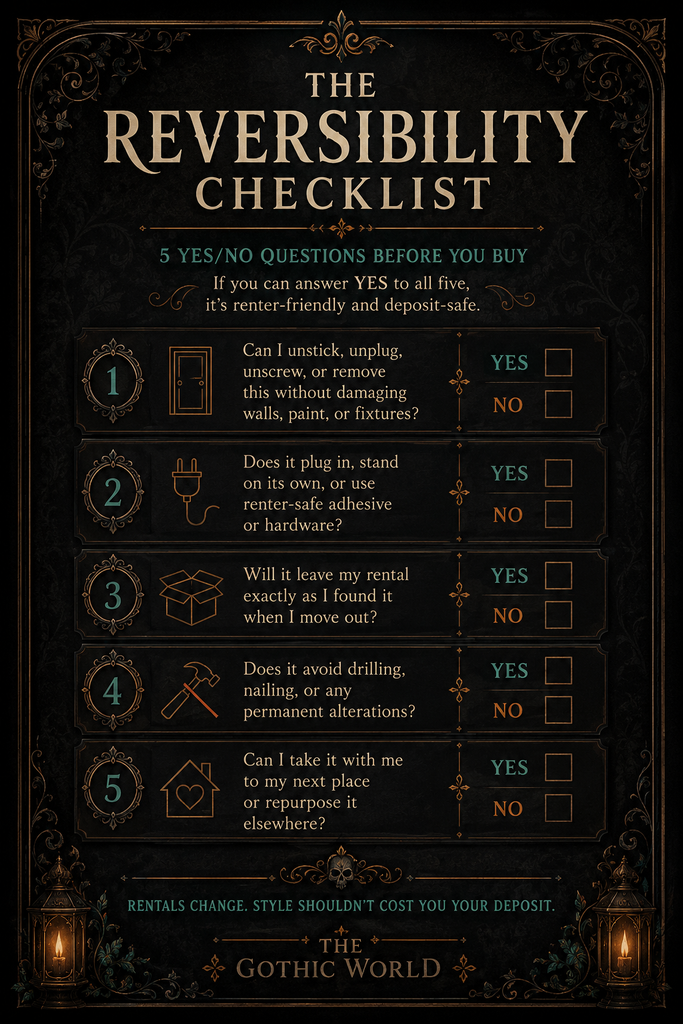
If something fails more than one of these, it’s not a renter-safe change, no matter how good it looks in the product photos.
Keep a small folder, physical or digital, of photos showing the room’s original condition before you make any changes. It costs nothing, takes five minutes, and is the single easiest way to avoid a deposit dispute if a landlord tries to blame pre-existing wear on your gothic makeover.
For a room-specific version of this same approach, our renter-friendly dining room guide and our gothic living room guide both apply the same reversibility filter to spaces this post doesn’t cover in depth.
Gothic doesn’t require ownership. It requires atmosphere, and atmosphere is built almost entirely from things that can be unplugged, unpinned, folded up, and taken with you.