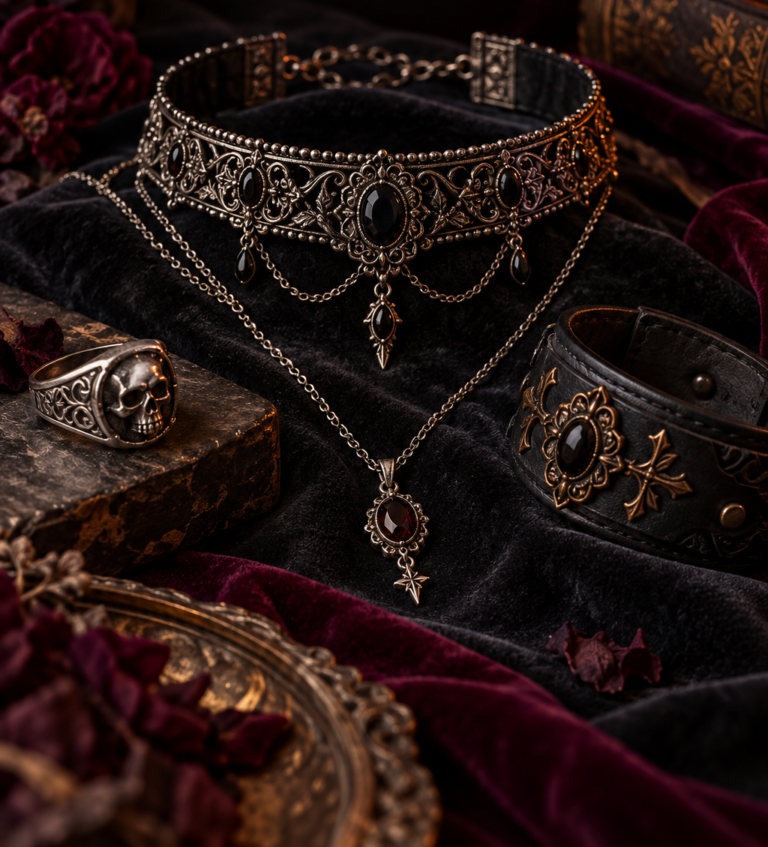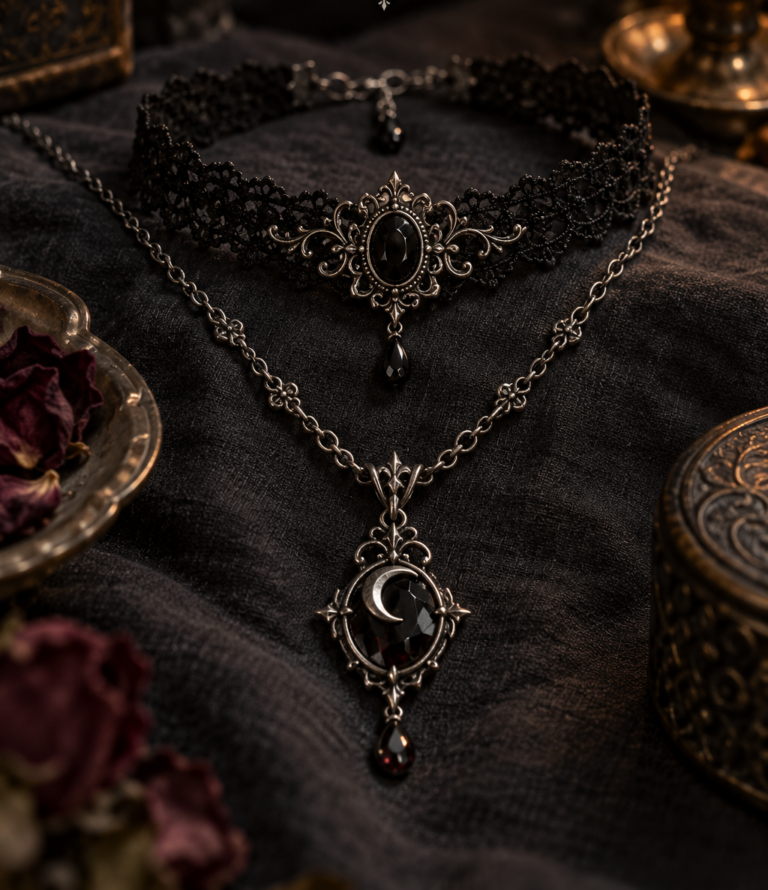
The year was 1861. Queen Victoria had just lost her beloved Prince Albert, plunging not only into personal grief but launching an era of elaborate mourning customs that would define Victorian society. Her influence on mourning fashion went far beyond the black dresses and veils we often picture – it sparked a revolution in jewelry that still captivates collectors today.
As an Amazon Associate I earn from qualifying purchases and sometimes recommend products from other sellers at no extra cost you. For more details see my disclosure policy and privacy policy. Posts may contain AI generated images to illustrate the content.
Queen Victoria’s devotion to mourning jewelry set the standard for how the Victorian era remembered their loved ones. She wore a locket containing Albert’s hair until her death, making such memorial pieces essential fashion statements among the upper and middle classes.

The Roots of Remembrance
Before Victoria’s influence, mourning jewelry existed but hadn’t reached the heights of popularity it would achieve during her reign. The Georgian era saw modest memorial rings and brooches, often featuring urns or willow trees in delicate enamel work. But Victoria’s public grief transformed these personal tokens into social necessities.
The Industrial Revolution played its part too. New manufacturing techniques made mourning jewelry more affordable, while an expanding middle class meant more people could participate in these customs. What started as an aristocratic practice became accessible to many, though the finest pieces remained luxuries.
Midnight Decor
3D printed gothic pieces
Darkly beautiful objects for the gothic home — printed fresh when you order. Each piece is conjured for your space and entirely yours.


Materials and Meanings
Black wasn’t just a color choice – it was a rule. Jet, a fossilized wood found primarily in Whitby, England, became the star material of mourning jewelry. Its deep black color and ability to take a high polish made it perfect for Victorian tastes. When genuine jet wasn’t available, alternatives like black glass (often called French jet) or black onyx stepped in.
Each piece of mourning jewelry told a story through its symbols:
- Forget-me-nots represented lasting remembrance and true love
- Pearls stood for tears and carried deep sentimental value
- Ivy leaves suggested eternal life and undying affection
- Empty chairs depicted the absence of the loved one
Hair Work and Artistry
Perhaps the most personal element of Victorian mourning jewelry was the use of human hair. Far from seeming macabre, Victorians saw hair as a beautiful, lasting connection to their departed loved ones. Skilled artisans wove it into intricate designs, creating everything from simple lockets to elaborate wreaths and landscapes.

These hair works weren’t always dark or somber. Some pieces featured bright gold wire wrapped around the hair, or pearls and gems mixed into the design. The result was both a memorial and a piece of art – something that could be worn proudly while maintaining its deeply personal meaning.
The Modern Collector’s Guide
Today’s collectors face an exciting but challenging market. While genuine Victorian mourning jewelry exists in substantial quantities, quality pieces command premium prices. The best examples often appear in specialized auctions or through reputable antique dealers.
For those starting their collection, here are key points to consider:
- Look for hallmarks and maker’s marks, especially on metal pieces
- Study the construction methods – many Victorian techniques are hard to replicate
- Be wary of jet alternatives – genuine jet feels warm to the touch and is surprisingly lightweight
Contemporary Revival
Modern artists are breathing new life into mourning jewelry traditions. They’re creating pieces that honor Victorian aesthetics while speaking to contemporary sensibilities about death and remembrance. This revival connects beautifully with the broader gothic lifestyle movement, showing how historical practices can inspire modern expressions of memory and loss.
Some contemporary pieces incorporate traditional elements like hair art and symbolic imagery, while others take a more abstract approach to remembrance. These new interpretations prove that the human need to memorialize loved ones through jewelry remains as strong as ever.

How to Wear Historical Pieces
If you’re lucky enough to own a piece of Victorian mourning jewelry, you can absolutely wear it today. These pieces work surprisingly well with modern gothic fashion trends. A jet brooch can add historic depth to a contemporary outfit, while a hair locket makes for a unique conversation piece.
Victorian mourning jewelry reminds us that grief and beauty can coexist. Each piece tells a story of love, loss, and remembrance – themes that resonate as deeply today as they did in Victoria’s time. Whether you’re a collector, history enthusiast, or someone drawn to meaningful jewelry, these remarkable pieces offer a tangible connection to how past generations honored their loved ones.
Want to explore more Victorian and gothic aesthetics? Check out our guides to creating dramatic looks and styling gothic interiors.