Gothic necklaces do a lot of quiet work. A choker sits differently at the throat than a pendant does, and a pendant reads differently again once you start layering it with chain. This guide breaks down the core necklace formats worn across the gothic wardrobe, how to choose between them, and how to keep blackened and oxidised metals looking their best long after the shop tags come off.
As an Amazon Associate I earn from qualifying purchases and sometimes recommend products from other sellers at no extra cost you. For more details see my disclosure policy and privacy policy. Posts may contain AI generated images to illustrate the content.
The Three Core Formats: Chokers, Pendants and Layered Chains
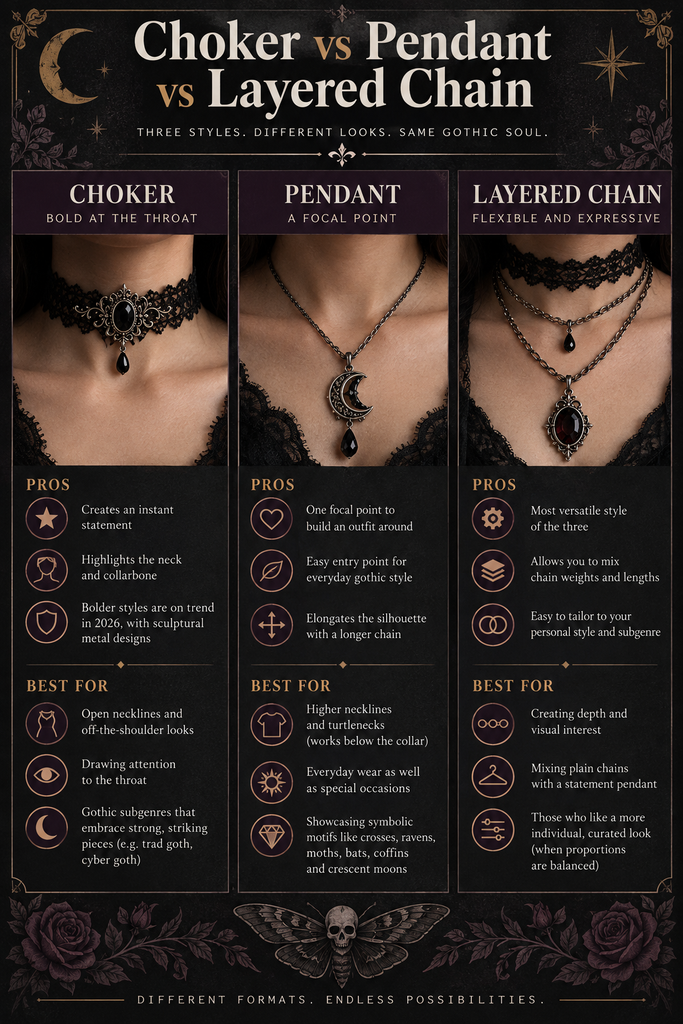
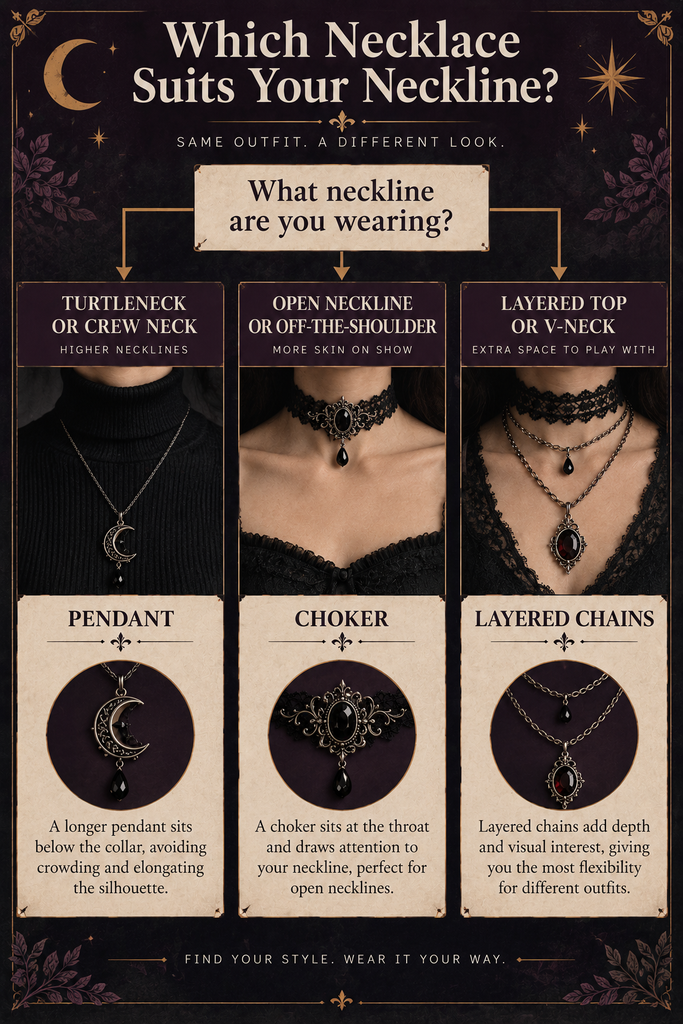
Chokers sit tight at the throat, and 2026 has been kind to them. Bolder, thicker choker styles are defining the year, with sculptural single statement pieces replacing the dainty layered chains that dominated a few seasons back. Some jewellery editors have taken to calling the new heavier metal chokers a kind of modern armour, which is about as goth a compliment as jewellery journalism gets.
Pendant necklaces do the opposite job. A single focal point hung on a longer chain gives you one thing to build an outfit around, which makes pendants the easiest entry point if you want gothic jewellery that reads as everyday rather than event-only.
Layered chains sit in between. You wear two, three, or more chains of different lengths together, usually mixing a few plain fine chains with one heavier pendant chain. It is the most flexible of the three formats, and the easiest to get wrong if you do not think about proportion first.
Midnight Decor
3D printed gothic pieces
Darkly beautiful objects for the gothic home — printed fresh when you order. Each piece is conjured for your space and entirely yours.


Choosing a Style for Your Neckline, Face Shape and Subgenre
Necklines set the rules before aesthetics do. High necklines and turtlenecks get crowded fast, so a longer pendant that sits below the collar works better than a choker fighting for the same few centimetres of fabric. Open necklines and off-the-shoulder cuts are where chokers earn their keep, since there is nothing else competing for attention at the throat.
Face and neck shape matter too. A choker draws the eye horizontally, which can visually shorten a longer neck. A pendant on a longer chain does the reverse, elongating the silhouette.
Subgenre is where personal taste takes over. Trad goth leans toward chunky crosses and cameo-style pendants with real weight to them. Romantic goth favours filigree work, rose motifs, and longer, more delicate chains. Cyber goth wants hardware: chain mail-style chokers, industrial clasps, and metallic finishes that catch light rather than absorb it.
Materials and Finishes: Blackened Metal, Oxidised Silver, Leather and Velvet
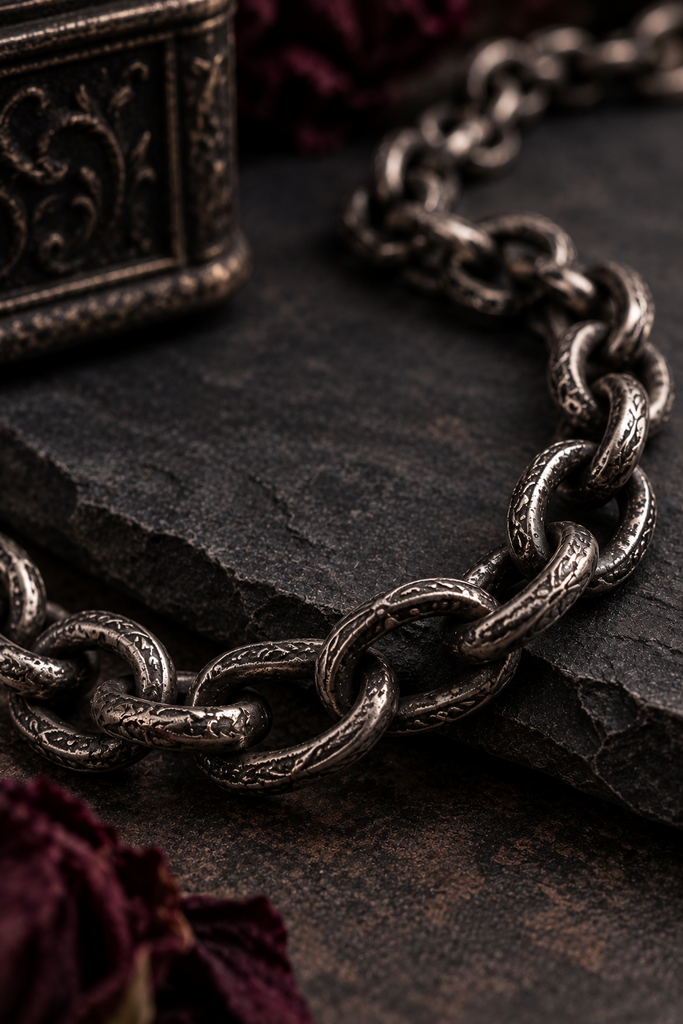
Blackened metal, usually black rhodium or gunmetal plating over a base metal, gives you a flat matte darkness that hides fingerprints reasonably well but still needs looking after. Oxidised silver is different: it is sterling silver that has been deliberately darkened and often left textured, which is very much a hallmark of gothic jewellery design. That texture is doing double duty, because it also reveals poor-quality plating almost immediately once wear starts to even out.
Leather cords and chokers remain a genre staple, particularly paired with a single metal pendant drop. Velvet ribbon chokers are the softer, more Victorian-coded option, and they are simple enough to make at home if you want to match a ribbon exactly to an outfit.
Layering and Styling Combinations
The classic combination is a fitted choker paired with one longer pendant chain, which gives you a short-long contrast without any risk of the two pieces tangling. If you are building out a fuller layered look, decide early whether you are mixing metals deliberately or keeping everything in one metal family. Deliberate mixing (oxidised silver next to a blackened chain, for instance) reads as intentional; accidental mixing usually just reads as odd.
Necklaces are not the only accessory doing this work. If you already wear stacked rings, our gothic rings guide covers signet, skull and gemstone styles that pair naturally with a layered necklace, since the same logic of contrast and restraint applies to both.
A Brief Note on Pendant Motifs
Crosses, ravens, moths, bats, coffins and crescent moons remain the reliable pendant motifs across the gothic wardrobe, and most of them work equally well in blackened metal or oxidised silver. We have covered the history and mourning-culture roots of symbolic pendants elsewhere, in our piece on Victorian mourning jewellery, so this guide is sticking to silhouette and styling rather than repeating that ground. If you are choosing a necklace by gemstone rather than by shape, our guide to dark gemstones for statement jewellery is the better starting point.
Caring for Blackened and Oxidised Metals
The biggest care mistake is treating a deliberately darkened piece like ordinary silver. Aggressive polishing strips the oxidised finish along with the tarnish, which defeats the point of buying it in that finish in the first place. A soft anti-tarnish jewellery polishing cloth is the safer option, used gently on the raised, exposed high points of a piece rather than worked into the recessed dark areas where the contrast lives.
Storage matters more than most people expect. Keep layered chains in separate small pouches or compartments rather than one jewellery box tray, since fine chains left loose will tangle themselves into a genuinely infuriating knot within a few weeks. Leather chokers should be kept dry and away from direct perfume contact, with an occasional light conditioning to stop the leather drying out and cracking. Velvet pieces are spot-clean only; a velvet ribbon that gets fully wet rarely dries back to its original texture.
Necklace Lengths at a Glance
Length is the detail that makes or breaks a layered look, and it helps to know the standard measurements before you buy. A collar sits at 12 to 13 inches, essentially a fitted choker. Standard chokers run 14 to 16 inches. A princess length, 17 to 19 inches, sits just at or below the collarbone and is the most versatile single-necklace length for everyday wear. Matinee length (20 to 24 inches) sits mid-chest and is where most pendant necklaces land. Opera length (28 to 36 inches) and rope length (36 inches and over) are the dramatic, event-ready options, and both can be doubled or wrapped for a completely different look from the same piece.
Knowing these bands makes layering far easier to plan. A collar-plus-matinee pairing gives you clean short-long contrast without any overlap, while stacking a choker, a princess and an opera length together fills in the space between without anything competing for the same spot on your chest.
Building a Gothic Necklace Capsule
If you are starting from nothing, resist buying five pendants in five different motifs before you own a single chain worth building on. A small, well-chosen capsule earns its keep faster than a drawer full of one-off pieces. Start with one plain oxidised silver or blackened chain in a matinee length, since this becomes the base for almost every layering combination in this guide.
Add one statement choker next, ideally in a finish that contrasts rather than matches your base chain, since contrast is what makes layering read as deliberate. From there, a single well-made pendant in blackened metal gives you the option to wear it alone or clipped onto your base chain for extra weight. Everything after that is personal taste rather than necessity, and it is far easier to fill genuine gaps once you can see what your existing pieces are not covering. Buying slowly also means each new piece has to earn its place next to what you already own, rather than competing with it.
Quick FAQ
Can I wear a metal choker every day without it tarnishing quickly? Yes, as long as you take it off before showering, swimming or sleeping, and give it an occasional wipe with a soft cloth. Daily wear is fine; daily contact with water and skincare products is what accelerates tarnish.
How do I stop layered chains from tangling in storage? Separate them physically. A shallow tray with dividers, individual small pouches, or even hanging each chain from its own hook works far better than coiling multiple chains together in one spot.
Is oxidised silver the same as blackened metal? Not quite. Oxidised silver is genuine sterling silver that has been chemically darkened, so the silver is still there underneath. Blackened metal is usually a plating (black rhodium or similar) applied over a base metal, which means it can wear through to the base metal beneath if the plating is thin or heavily used.
What is the difference between a choker and a collar necklace? A collar sits slightly higher and tighter than a standard choker, generally in the 12 to 13 inch range versus 14 to 16 inches for a choker. In practice the two terms get used interchangeably by most sellers, so check the actual measurement listed rather than relying on the name alone.
Do gothic necklaces work with non-gothic outfits? Yes, and this is one of the easiest ways to wear the aesthetic day to day. A single oxidised silver pendant or a plain blackened chain reads as simply dark jewellery rather than a full subculture statement, which makes it easy to fold into an otherwise ordinary outfit.