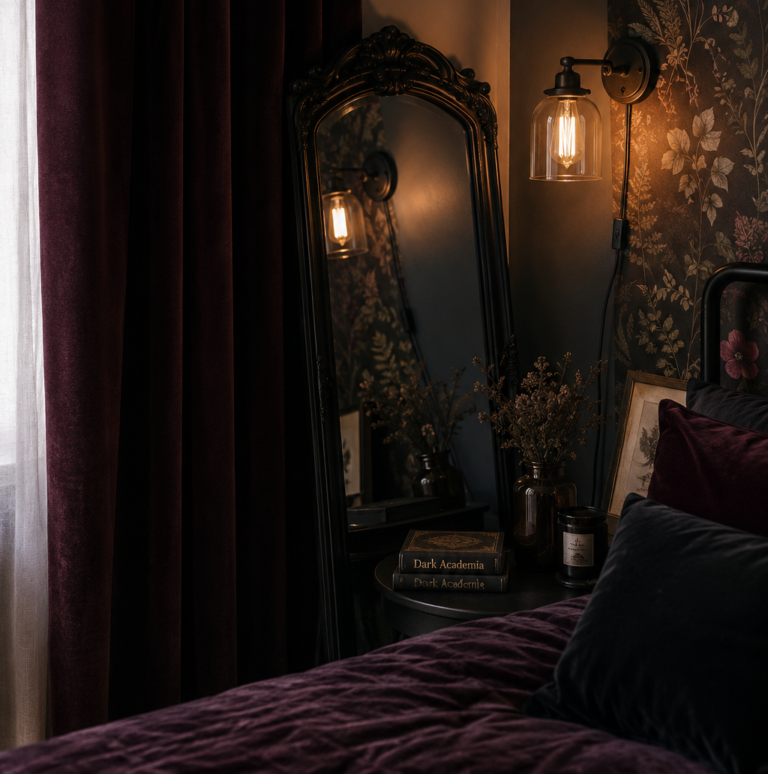
A gothic living room isn’t about owning a black sofa and calling it done. It’s about building a space that feels cinematic the moment you walk in, somewhere between a Victorian parlour and a candlelit chapel, without it tipping into costume territory. This guide walks through the palette, furniture, lighting, and finishing touches that turn an ordinary living room into your own dark sanctuary.
As an Amazon Associate I earn from qualifying purchases and sometimes recommend products from other sellers at no extra cost you. For more details see my disclosure policy and privacy policy. Posts may contain AI generated images to illustrate the content.
Whether you’re starting from a blank rental or slowly transforming a room you’ve lived in for years, every idea here is designed to be adapted to your space and your budget. We’ll cover the classic, full-drama version of the style alongside the softer “gothic romance” look that’s having a real moment right now.
What Gothic Living Room Style Actually Means
Gothic interiors lean on atmosphere over brightness. Think rich, moody colour, ornate detail, and a nod to medieval or Victorian architecture, all working together to make a room feel like it has history. The goal is drama with intention, not darkness for its own sake.
This look has roots that go back centuries, but the modern version borrows freely from different eras and subcultures. If you want a deeper look at how the wider aesthetic translates across an entire home, our guide to designing a gothic interior space is a good place to start before you commit to one room.
Midnight Decor
3D printed gothic pieces
Darkly beautiful objects for the gothic home — printed fresh when you order. Each piece is conjured for your space and entirely yours.


A few principles carry through every version of the style:
- Darkness used as a backdrop, not a void
- Texture and pattern doing the work that bright colour usually does
- Lighting treated as a design feature, not an afterthought
- Objects that feel collected over time rather than bought as a set
Once those four things are in place, almost any furniture you already own can be worked into the scheme.
Choosing Your Palette: Classic Drama vs. Modern Gothic Romance
Your colour choices set the tone for everything else in the room, so it’s worth slowing down here before you buy a single cushion.
Classic Gothic Colour Choices
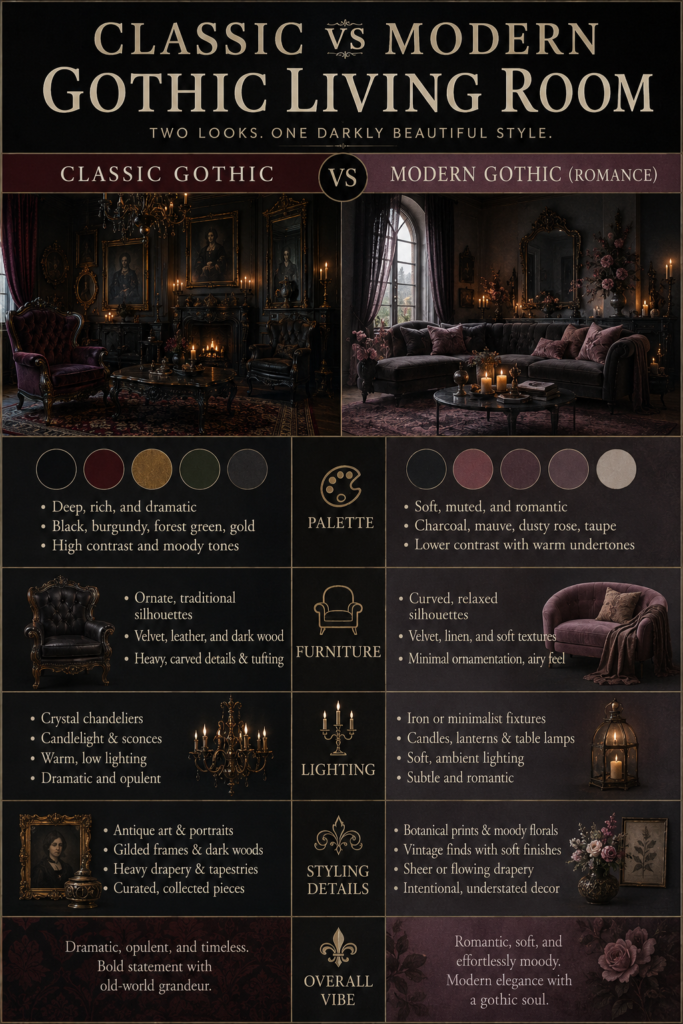
The traditional approach leans on black, charcoal, and deep jewel tones like emerald, wine red, navy, and plum. Black works best as either the dominant shade on walls and large furniture, or as a strong accent against darker neutrals, since pairing it with bright white tends to read as costume-y rather than elegant. Antique brown and aged gold add warmth so the room doesn’t feel flat or cold.
The Softer Gothic Romance Palette
If full black walls feel like too big a leap, the modern “gothic romance” trend swaps pure darkness for moody sophistication instead. Charcoal and deep green are mixed with burgundy, warm brown, and the occasional flash of gold hardware or brass lighting. It’s a look that reads as elegant rather than severe, and it tends to suit smaller or lighter-filled rooms better than the full classic palette.
If you want to see this kind of jewel-tone, gold-accented styling carried into a bedroom, our piece on the purple gothic bedroom shows how far a single rich colour can stretch across a whole room.
Furniture That Sets the Mood
Furniture is where the gothic living room either comes together or falls apart, so it’s worth being selective rather than buying everything at once.
Statement Seating and Carved Details
Look for pieces that feel substantial: heavy dark woods, carved details, turned legs, and high-backed chairs or sofas. A single high-backed armchair can anchor an entire seating area even if everything else in the room is fairly plain. Velvet upholstery in a deep jewel tone does a lot of heavy lifting here, since it catches light beautifully under lamps and candles.
Reclaimed and Ecclesiastical Pieces
Reclaimed or church-adjacent furniture brings instant character that’s hard to fake with new pieces. Old pews, altar-style console tables, and trestle benches all read as gothic almost immediately, simply because of where that style of furniture originally came from. Secondhand shops, architectural salvage yards, and estate sales are usually a better hunting ground for these than mainstream furniture retailers.
Layering Light Like a Cinematic Set
Lighting is arguably the single most important element in a gothic room, more than colour or furniture. A beautifully styled room under flat, bright overhead light loses almost all of its atmosphere.
Chandeliers, Sconces, and Table Lamps
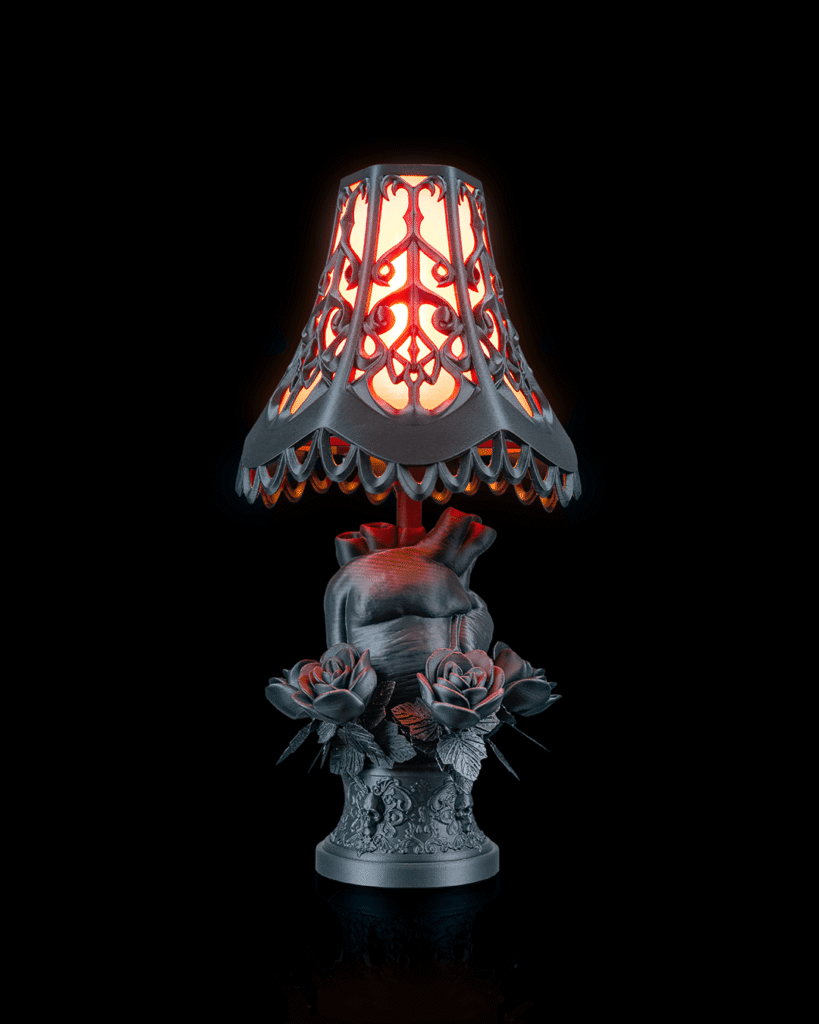
A wrought iron or crystal chandelier makes an obvious centrepiece, but the real magic comes from layering it with wall sconces and table lamps so light pools in different corners of the room rather than flooding it evenly. This is where smaller decorative lighting pieces earn their place. Our Black Heart lamp and lampshade throws a heart-shaped silhouette across the walls in a way a plain shade never will, and a moody table lamp like the Sepulchral Light on a side table does more for atmosphere than most overhead fixtures combined. Both are printed when your order is placed rather than pulled from a stockroom, so the details stay sharp.
Candlelight and Warm Bulbs
Candelabras, taper candles, and clusters of pillar candles reinforce that old-world, romantic feeling, and they pair naturally with warmer, dimmer bulbs elsewhere in the room. A piece like our Dark Chalice candle holder works well as a single dramatic centrepiece on a mantel or coffee table, rather than getting lost among smaller candles. If you want seasonal inspiration for styling candles and layered lighting together, our gothic autumn decor guide has some good starting points that translate well year-round.

Textiles, Walls, and the Details That Make It Feel Lived-In
This is the stage where a room stops looking like a showroom and starts looking like somewhere you actually live.
Textiles and Texture
Velvet, silk, brocade, and embroidered fabrics on curtains, cushions, and upholstery add the tactile richness that makes a dark room feel inviting rather than cold. A patterned rug, ideally something Persian-style or richly detailed, anchors the seating area and adds depth underfoot. Faux fur throws layered over a velvet sofa are an easy way to soften a room that’s leaning too formal.
Walls, Art, and the Gallery Effect
Dark, textured walls in charcoal, off-black, or deep green give ornate frames and mirrors somewhere to stand out. A gallery wall of mismatched gothic-style frames, some black, some gold, some deep-toned, works whether you arrange it symmetrically for a formal feel or more loosely for something closer to a salon wall. If you’d rather hang one striking piece than build out a full gallery, something like our Ravenhold wall piece works as functional art on its own, doubling as a sculptural accent without needing anything else around it.
Motifs and Curiosities
A handful of well-chosen objects, busts, candlesticks, old books, a raven or two, do more to make a room feel collected than any single big purchase. A statue like our Veil of Silence piece works well on a mantel or bookshelf for exactly this kind of styling, sitting alongside books and candles rather than standing alone. Style them on shelves and mantels the way you’d style a room you’d lived in for a decade, not a room you finished last weekend. If you like this kind of styled, book-and-curiosity-filled shelving, our guide to creating a gothic reading nook goes deeper into building out a corner like this properly.
Modern Gothic Trends Worth Borrowing
The gothic aesthetic has shifted a fair amount in recent seasons, and a few of those shifts are genuinely useful for living rooms specifically.
The Dark Academia Crossover
Floor-to-ceiling books, vintage globes, botanical prints, and old scientific instruments have crept into gothic interiors from the dark academia trend, and the overlap works particularly well in a living room with a reading corner or built-in shelving. Pairing a contemporary velvet sofa with an antique side table or carved bookshelf keeps the room from feeling like a museum exhibit. Our full breakdown of dark academia style covers where this aesthetic overlaps with gothic and where the two diverge.
Gothic Glam With Gold Hardware
Mixing dark walls or furniture with gold hardware, brass lighting, and ornately framed mirrors creates what’s often called gothic glam, and it photographs beautifully without losing any of the moodiness. It’s a particularly good direction if your space gets decent natural light, since the metallics help bounce that light around instead of letting the room read as flat.
Making It Work in Small Spaces and Rentals
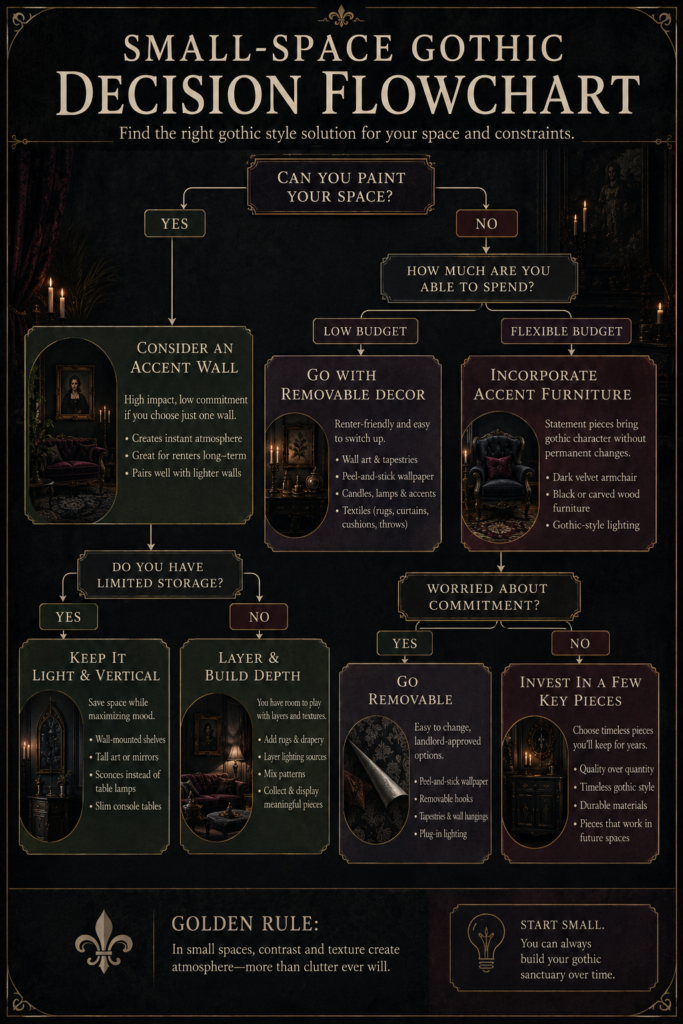
You don’t need to repaint every wall black to get this look working in a rental or a smaller room.
- Paint a single accent wall instead of the whole room
- Use dark accent furniture against lighter, still-moody walls
- Lean on removable decor like art, rugs, and lighting that travels with you
- Thread black through smaller accessories, frames, lamp bases, side tables, paired with one strong jewel tone
A mirror placed opposite a window also helps a smaller, darker room feel less closed in, since it reflects whatever natural light you do have back into the space. If you’re working with limited storage too, our guide to organizing a dark sanctuary has some practical ideas for keeping a small moody space from feeling cluttered.
Carrying the Mood Through the Rest of Your Home
Once your living room has this look nailed, the temptation to keep going is real, and honestly, it’s worth following. The same principles, jewel tones, layered lighting, collected objects, translate well into other rooms with only minor adjustments. If a bedroom redo feels like the natural next step, our piece on creating a stunning black gothic bedroom picks up a lot of these same ideas at a smaller scale, and our guide to a gothic bathroom transformation shows how far the aesthetic can stretch into the most overlooked room in the house.
A gothic living room rewards patience more than a big single purchase. Start with the palette, get the lighting layered properly, and let the smaller objects accumulate over time rather than all at once. The room that results will feel like it has a story, which is really the whole point of the style in the first place.
Want more room-by-room gothic decor guides as they go live? Subscribe to The Gothic World’s newsletter for new interior posts before they hit the blog.