
Most gothic garden guides stop at black flowers and moody foliage, and herbs get left out entirely. That is a shame, because dark-leaved basil and bronze fennel do as much atmospheric work as any near-black rose, and the poison garden tradition gives the whole bed a genuine historical backbone. This is the herb layer your gothic garden has been missing: what to grow, what to admire from a safe distance, and how to keep the two apart.
As an Amazon Associate I earn from qualifying purchases and sometimes recommend products from other sellers at no extra cost you. For more details see my disclosure policy and privacy policy. Posts may contain AI generated images to illustrate the content.
🌿 The Herbs That Actually Give You Dark Foliage
Dark opal basil is the obvious starting point. Its foliage runs nearly black-purple, with pink flowers appearing mid to late summer that read as genuinely dramatic against paler planting. It wants a light, well-draining soil amended with compost, takes a little longer to germinate than green basil, and rewards pinching the flowers back to keep the leaves coming rather than turning bitter.
Bronze fennel earns its place for the feathery, copper-toned foliage that catches low light beautifully, and it self-seeds generously once established. Purple sage brings a dustier, more muted tone that works well against brighter foliage. Black-leaved perilla, sometimes sold as shiso, rounds things out with near-black, crinkled leaves and a sharper, more unusual flavour if you cook with it.
- Dark opal basil: near-black purple leaves, pink flowers, culinary
- Bronze fennel: coppery feathery foliage, self-seeds
- Purple sage: dusty purple-grey, hardy perennial
- Black perilla (shiso): crinkled near-black leaves
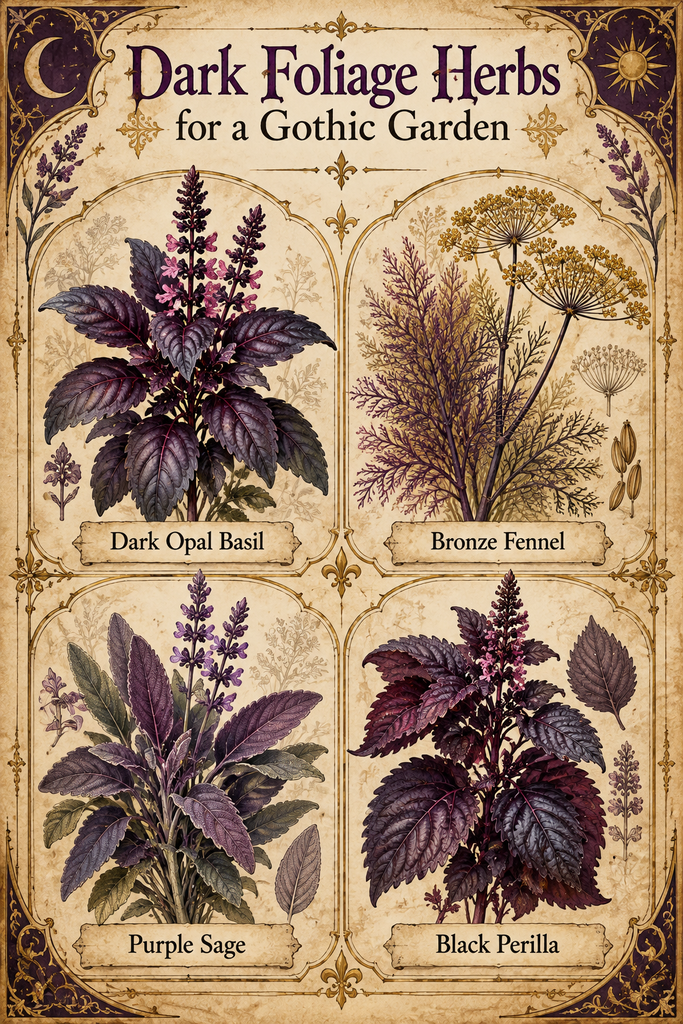
All four are slower to establish than their green counterparts, so resist the urge to harvest heavily in the first season. Once settled, dark opal basil in particular freezes well: whole leaves in an ice cube tray with a little oil hold both the colour and the flavour through winter, which is a useful trick if you want that near-black note in the kitchen as well as the border.
Midnight Decor
3D printed gothic pieces
Darkly beautiful objects for the gothic home — printed fresh when you order. Each piece is conjured for your space and entirely yours.


If you want the full near-black flower lineup to plant alongside these, The Best Dark Plants for a Gothic Garden already covers that ground in detail.
🏚️ Medieval and Monastic Herbs With Gothic Character
Long before anyone was planting for aesthetics, monastic physic gardens grew herbs for their traditional, practical value, and several of those plants still carry the gothic character we are after. Rue, with its blue-grey foliage, was a staple of medieval kitchen and medicinal gardens and carries centuries of folklore around protection. Wormwood’s silvery, feathery leaves and famously bitter reputation made it a fixture of monastery beds and old apothecary lore alike.
Mugwort has a long traditional association with dreaming and divination in European folklore, alongside its more mundane history as a culinary and household herb. Comfrey, with its broad, slightly coarse leaves, was traditionally grown near monastery infirmaries. Hyssop, an aromatic evergreen shrub, appears repeatedly in medieval garden plans and has a long folkloric association with purification.
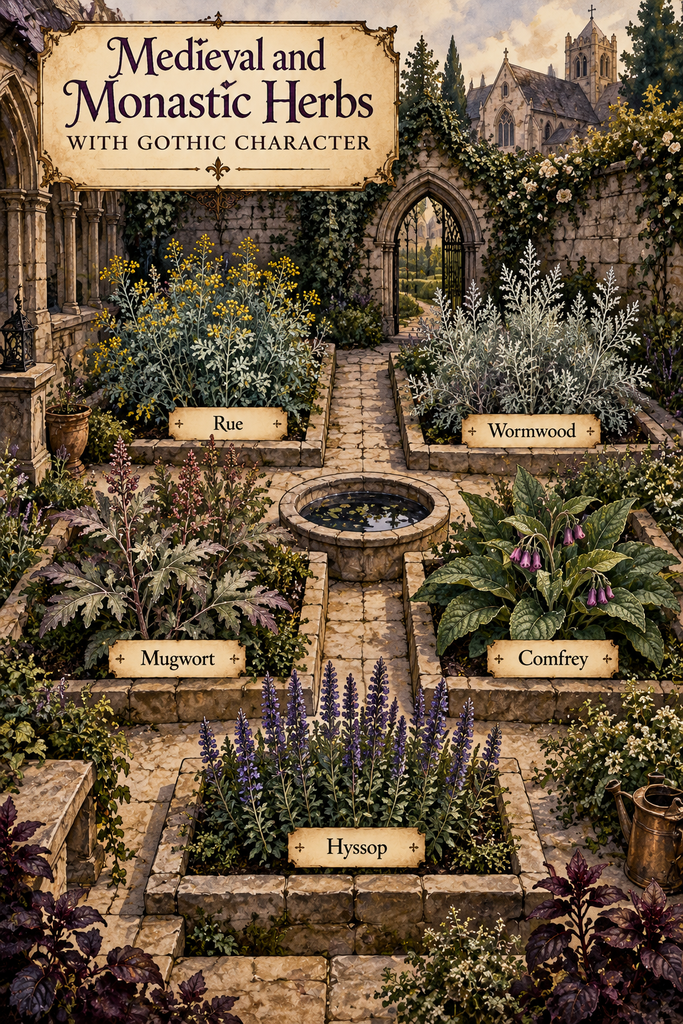
None of these plants need to be used for anything to earn a spot in your bed. Their traditional-use history is the point: growing rue or wormwood is a way of keeping a centuries-old garden tradition alive, not a suggestion to prepare or ingest anything.
Visually, this group does quieter work than the dark foliage herbs. Rue’s blue-grey leaves and wormwood’s silver tone read almost frost-touched against darker planting, which gives a gothic bed the slightly overgrown, half-abandoned monastery-garden look that pure black foliage cannot manage on its own. Mugwort and hyssop both flower, mugwort in modest reddish-brown spikes and hyssop in small blue to violet blooms that draw bees reliably through late summer.
🏛️ Physic Gardens Through History
The poison garden tradition did not appear from nowhere. It grew directly out of the physic garden, a category of garden built specifically to grow plants for their traditional medicinal, culinary, and practical uses, dangerous ones included. Medieval monasteries kept these gardens as a matter of necessity, since the monastery infirmary depended on what grew within the walls, and knowing which plants healed and which plants harmed was inseparable knowledge.
That tradition carried into the Renaissance with the first university botanic gardens, purpose-built to teach medicine and botany side by side. The Orto Botanico di Padova in Italy, founded in 1545, is widely considered the oldest of these still on its original site, and it grew toxic and medicinal plants together for exactly the same teaching reason the Alnwick Poison Garden does now: understanding danger was part of understanding the plant kingdom, not separate from it.
☠️ Why Gardens Grew Poison on Purpose: The Poison Garden Tradition
Physic gardens were never just about the herbs you could eat or brew. Understanding what was dangerous was just as essential to a working garden as growing what was useful, and that tradition survives today in a handful of deliberately toxic collections.
The best-known modern example is The Alnwick Garden’s Poison Garden in Northumberland, which holds around 100 dangerous species behind black iron gates and opens only to guided tours. Laburnum, belladonna, monkshood, castor bean, and giant hogweed all grow there, with the most hazardous specimens kept in cages and visitors strictly forbidden from touching, smelling, or tasting anything. The garden exists to teach poison history and safe plant identification, not to encourage anyone to handle what grows inside it.
That is the model worth borrowing at a much smaller scale: a gothic herb garden can hold a few toxic ornamentals purely for their look and their history, provided the same caution applies. Grow to look, not to use.
🥀 Toxic Ornamentals for Look and History Only
A handful of toxic plants earn their place in a gothic bed for appearance and folklore alone. Foxglove’s tall spires of speckled, bell-shaped flowers are dramatic in any border, and its history in traditional medicine is well documented, though every part of the plant is toxic if ingested. Monkshood produces striking, hood-shaped deep purple flowers and is considered one of the most toxic ornamental plants commonly grown in gardens.
Belladonna, or deadly nightshade, has dark, glossy berries and a genuinely notorious history, hence the name: it comes from the Italian for “beautiful lady,” a reference to its historical cosmetic use for dilating the pupils. Hellebores, often called Christmas or Lenten roses depending on the variety, bring near-black or deep plum blooms in the depths of winter when little else flowers, and they carry their own toxicity alongside that seasonal drama.
Height and bloom timing matter when you are placing these in a border. Foxglove reaches waist height or taller in its second year and blooms early summer, making it a natural back-of-bed plant. Monkshood flowers late summer into autumn at a similar height, so the two can extend a toxic bed’s visual interest across most of the growing season without overlapping too heavily. Belladonna is a sprawling, shrubbier plant that benefits from firm staking, and hellebores stay low and are best planted where their winter blooms are actually visible from a window or path, rather than tucked behind taller summer growth.
Safety comes first with all four of these:
- Keep them out of reach of pets and children, and site them away from paths where leaves or berries might be brushed against
- Wear gloves when pruning or deadheading
- Never plant them near anything you intend to eat
- Label them clearly, especially if anyone unfamiliar with the garden might work in it
This is look-and-history information only. Nothing here is instruction for preparing, extracting, or using any of these plants, and none of them should be treated as a home remedy. Before you plant any of these, the Royal Horticultural Society’s guide to potentially harmful garden plants is a genuinely useful safety reference, and if pets share the garden, the ASPCA’s toxic and non-toxic plant list is worth checking against anything you are considering.
🖤 Laying Out a Bed That Keeps Its Secrets Straight
The practical challenge of a gothic herb garden is keeping the toxic ornamentals and the genuinely useful herbs from ending up tangled together. A simple, reliable approach is physical separation: dedicate one bed, border, or raised section to toxic ornamentals only, and keep culinary and traditional-use herbs in a completely separate area.
Companion planting still works within each zone. Bronze fennel and purple sage pair well texturally, while foxglove and monkshood both prefer similar part-shade, humus-rich conditions and can be grouped together in the toxic bed without issue. Rue and wormwood, both traditionally grown near vegetable beds as companion plants, sit comfortably in the culinary zone alongside the dark-foliage herbs rather than with the ornamentals, since their traditional use puts them firmly in the useful-herb category.
A low physical barrier does more work than people expect. A run of edging stones, a change in paving, or even a distinct mulch colour between the two zones gives a visual cue that reinforces the labelling, which matters most in a garden that other people, not just the gardener, spend time in. Raised beds are an even more reliable option for the toxic ornamentals specifically, since the extra height keeps low-growing pets and small children further from the plants without changing the garden’s atmosphere.
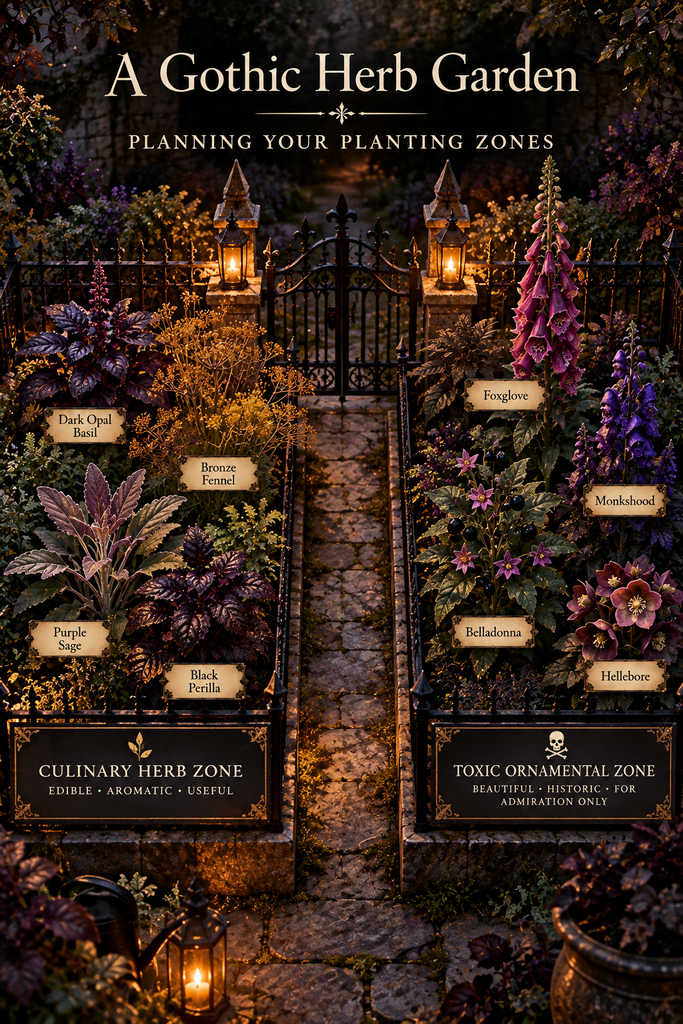
Clear, weatherproof labelling matters more here than in an ordinary herb bed, particularly if children, pets, or garden helpers who do not know the plants have any access to the space. Slate or metal plant markers suit the aesthetic better than plastic, and including both the common and botanical name on each one avoids any confusion between, say, an ornamental hellebore and a culinary herb with a similar silhouette.
🌑 Container and Small-Space Options
Most of the herbs here adapt well to containers, which makes this an easy layer to add even without a dedicated bed. Dark opal basil and purple sage both do well in pots on a balcony or patio, and a weatherproof dark resin balcony planter keeps the look consistent with the rest of a gothic outdoor space while surviving weather that would ruin unglazed terracotta.
For a fuller rundown of container-specific gothic gardening, including which toxic ornamentals are safe to pot up and which are better left to full beds, see Gothic Garden Ideas for Small Spaces.
🕯️ Quick Answers Before You Start
Can I grow toxic ornamentals if I have pets? You can, but site them well away from anywhere pets roam unsupervised, and choose containers or raised beds with hard barriers rather than open ground if there is any doubt.
Do these herbs need special soil? Most of the culinary and monastic herbs here want the same light, well-draining, compost-amended soil that suits most herb gardens. The toxic ornamentals tend to prefer slightly richer, part-shaded conditions, which is one more reason to keep the two groups in separate beds.
Is it safe to compost trimmings from toxic plants? Home composting does not reliably break down some plant toxins, so many gardeners choose to bin toxic plant waste separately rather than compost it with edible garden trimmings.
When should I plant the monastic herbs? Rue, wormwood, mugwort, comfrey, and hyssop are all typically planted in spring after the last frost, once the soil has warmed. All five are hardy perennials once established, so this is largely a one-time planting rather than an annual task, unlike the dark opal basil and perilla, which are grown fresh each year in most climates.
Will the toxic ornamentals attract wildlife I don’t want? Foxglove and monkshood are both genuinely valuable for pollinators despite their toxicity to mammals, and bees in particular visit both freely. The toxicity that makes these plants unsafe to handle or ingest does not extend to the insects that pollinate them, so a toxic bed can still be a genuinely useful part of a wildlife-friendly garden.