
A gothic garden doesn’t require an actual garden. Balconies, courtyards, and a stack of containers can carry the same moody, dark-foliage atmosphere as a full outdoor space, just scaled down to fit whatever square footage you’ve got. Here’s how to build that look in pots, containers, and rented spaces without sacrificing any of the drama.
As an Amazon Associate I earn from qualifying purchases and sometimes recommend products from other sellers at no extra cost you. For more details see my disclosure policy and privacy policy. Posts may contain AI generated images to illustrate the content.
🖤 Gothic Gardening Without a Garden
Not having a plot of ground doesn’t mean you’re locked out of a gothic outdoor space. Balconies, courtyards, and even a single windowsill can carry the same moody, dark-foliage aesthetic as a full garden, just scaled down and rethought for pots. If you want the ground-level version of this look, our full gothic garden guide covers borders, paths, and year-round planting in detail. This one is for everyone working with rails, concrete, and containers instead.
The core gothic garden principles still apply: deep foliage colour, textural contrast, and a slightly wild, after-dark atmosphere. You’re just working within the physical limits of pots, weight restrictions, and whatever light your space actually gets.
🪴 Building Container Combinations for a Gothic Look
The classic container gardening formula is “thriller, filler, spiller”: one tall dramatic plant, one bushy mid-height plant, and one trailing plant that spills over the pot’s edge. It works just as well for a dark palette as it does for a bright one.
Midnight Decor
3D printed gothic pieces
Darkly beautiful objects for the gothic home — printed fresh when you order. Each piece is conjured for your space and entirely yours.


Thriller options: Ornamental peppers like ‘Black Pearl,’ with near-black leaves and glossy black-red fruit, make a striking upright centrepiece. Dark-leaved cannas or a compact black bamboo also work if you want more height.
Filler options: Black mondo grass is a reliable filler with fine, near-black grass-like foliage, and ‘Black Prince’ coleus brings soft, deep purple-black leaves that do well in sun or shade. Both pair easily with darker thrillers without competing for attention.
Spiller options: Trailing black sweet potato vine (Ipomoea batatas ‘Blackie’) is one of the easiest dark spillers to find and grow, cascading over a pot’s edge in deep purple-black leaves.
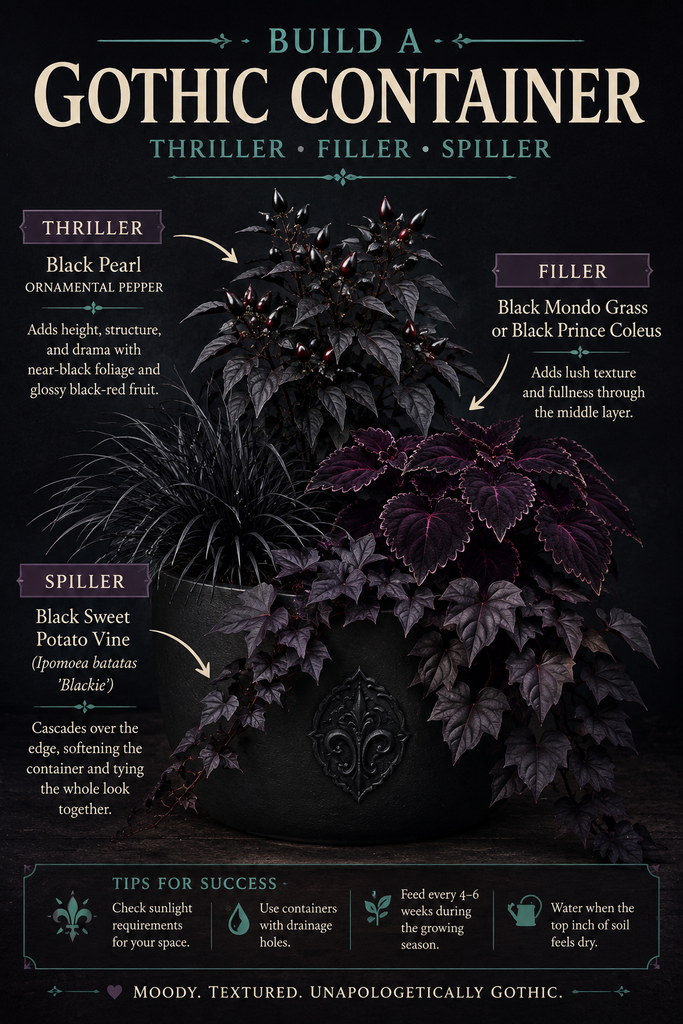
Pairing the darkest possible foliage with an equally dark-coloured planter tends to read as more intentional and more gothic than mixing dark plants into a plain terracotta pot. It also unifies containers that might be different shapes or heights, since the colour is doing the visual work.
🌑 Dark Plants That Actually Thrive in Pots
Not every plant that works well in the ground translates cleanly to container life; root space, drainage, and exposure are all different. If you’re coming from our guide to the best dark plants for a gothic garden, most of those ground-focused picks assume more root room and insulation than a pot provides, so a slightly different shortlist works better here.
Reliable container performers include black mondo grass, coleus varieties, dark-leaved heucheras (coral bells), and black sweet potato vine, all of which tolerate the more limited soil volume and temperature swings that come with pot life. Black petunias and pansies are good seasonal colour options for smaller pots that get decent sun. For something more architectural, a compact dark-leaved dahlia in a large container can read as a genuine “thriller” through summer and early autumn.
🪱 Soil and Drainage Basics for Gothic Containers
Container plants live or die by drainage more than almost any other factor, since a pot with nowhere for excess water to go will rot roots within weeks regardless of how well-suited the plant is to your climate. Always choose containers with drainage holes, and add a layer of broken crockery or gravel at the base if the pot is deep, to stop compost from clogging the holes.
A general-purpose peat-free potting compost works for most of the dark foliage varieties mentioned above, though anything with heavier flowering demands, like a dahlia thriller, benefits from a compost with slow-release fertiliser mixed in. Terracotta and unglazed clay pots dry out faster than plastic or resin, which matters more on an exposed, sun-facing balcony than in a shadier courtyard.
If weight is a concern, a lighter, soil-less potting mix cuts down considerably on the overall load compared to a heavier, moisture-retentive compost, worth checking if your balcony’s weight allowance is tight.
🕯️ Building a Balcony Night Garden
A night garden is about what the space looks and smells like after dark, not just during the day. A few practical elements make the biggest difference on a balcony:
- Fragrance: night-scented stock, moonflower vine (where it can be grown as an annual), and jasmine all release scent in the evening and work well in large pots
- Pale and silver highlights: white or silver-variegated foliage and pale flowers catch what little light there is after dark, giving the space a ghostly, luminous quality against the dark foliage
- Simple lighting: you don’t need anything elaborate. A renter-friendly plug-in wall sconce avoids any wiring or drilling and gives just enough warm light to sit outside comfortably after sunset, without washing out the moodier, darker tones you’ve built the space around
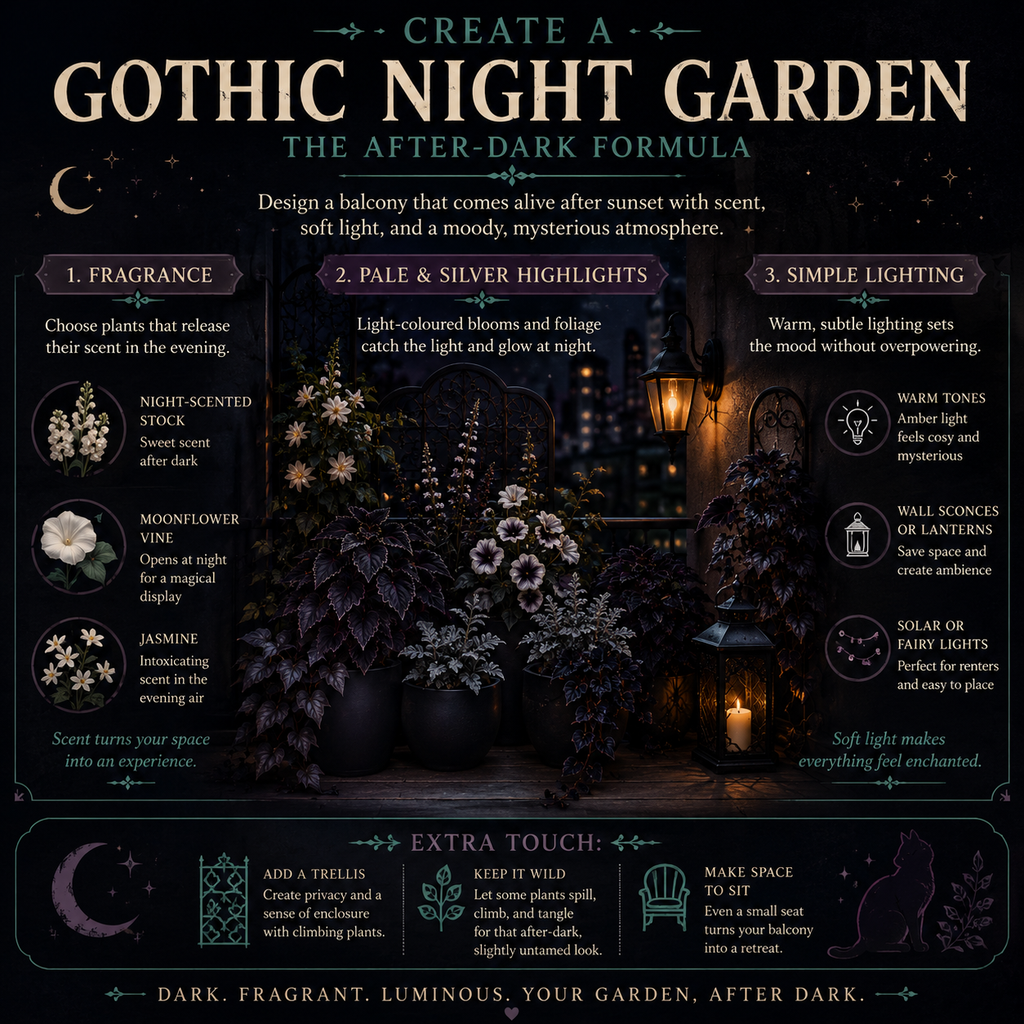
Keep lighting minimal and warm-toned rather than bright and white. The goal is atmosphere, not floodlighting.
For added privacy on an overlooked balcony, a trellis planted with a black-flowered climbing sweet pea or a dark-leaved clematis does double duty, screening the space while keeping the night garden’s colour palette consistent.
🏛️ Courtyard and Small-Patio Layout Ideas
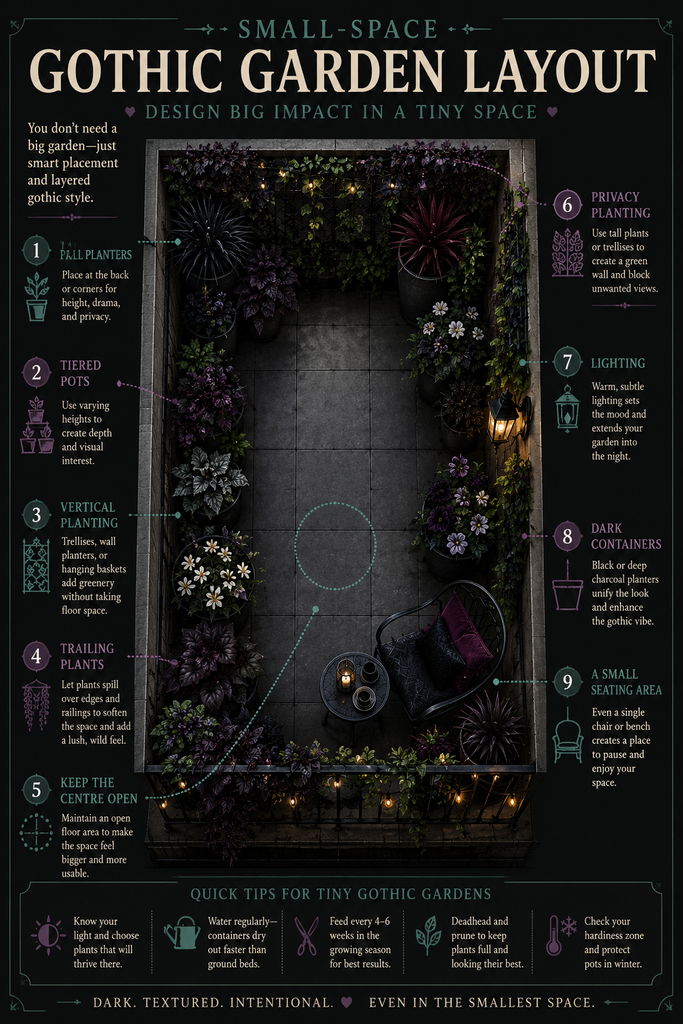
Hardscaped, non-garden spaces like courtyards and small patios benefit from height variation more than a ground garden does, since you can’t dig down for visual interest. Grouping pots at different heights using plant stands, upturned crates, or a simple tiered shelf creates the layered look a border would normally provide.
Vertical space is your friend in a courtyard. A trellis or wall-mounted planter with a trailing dark ivy or black-leaved vine adds height without taking up floor space, and it echoes the wrought-iron, climbing-plant look of a full gothic garden in miniature.
If the space is shared or overlooked by neighbours, dense planting around the edges rather than the centre tends to create more privacy and a more enclosed, intimate atmosphere, which suits the gothic aesthetic better than an open, exposed layout.
🪟 Container and Material Choices for Renters
Renters have specific practical constraints worth planning around before buying anything.
Drainage without damage: use pots with saucers rather than drilling into balcony flooring, and check building rules before hanging anything from a railing.
Weight limits: balconies often have posted weight restrictions. Lightweight resin or fibreglass planters give you the dark, substantial look of stone or metal without the actual weight, which matters if you’re working with several large pots.
Portability: anything on castors or a lightweight base is easier to move for cleaning, seasonal rearranging, or when you eventually move out. This matters more for container gardens than ground gardens, since the whole point is that it can travel with you.
If full-size planters aren’t practical for your situation, our guide to renting on a budget without permanent changes has more ideas for keeping a gothic look flexible and damage-free, several of which apply directly to balcony and courtyard setups.
🕸️ Budget-Friendly Styling Touches
You don’t need to replace every plain terracotta pot to pull the look together. A few coats of matte black spray paint, rated for outdoor use, turns a mismatched collection of secondhand pots into a cohesive dark display for a fraction of the cost of buying new black planters.
Black or dark grey decorative mulch and gravel toppers finish off a pot’s surface and hide bare compost, giving even a young, still-filling-in plant a more finished look. Secondhand shops and local marketplace listings are worth checking before buying new; a chipped or faded pot disappears completely under a coat of paint.
Small additions like a single antique-style key, a miniature iron gate ornament, or a scattering of dark glass beads as a mulch alternative add a gothic touch without needing to source anything plant-related at all.
🍂 Seasonal Care for Pot-Grown Plants
Container plants are more exposed to temperature swings than anything in the ground, since there’s no surrounding soil mass to buffer against heat or cold. A few adjustments keep a small-space gothic garden looking good year-round:
- Water more frequently in summer, since pots dry out faster than garden beds
- Move tender plants like coleus or black sweet potato vine indoors or treat them as annuals before the first frost
- Refresh potting mix annually, since container soil depletes faster than ground soil
- Rotate seasonal colour (pansies and violas for autumn/winter, then summer annuals) rather than expecting one planting to last all year
A small-space gothic garden takes a bit more seasonal attention than a ground garden, but it also means you can completely refresh the look each season without redesigning an entire border.


