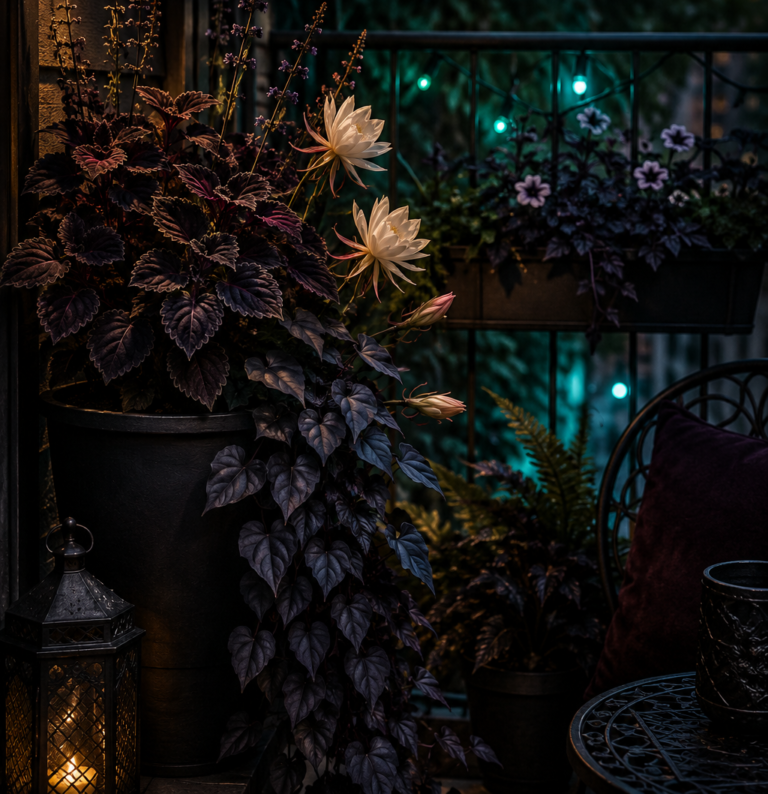
Autumn is when a gothic garden finally stops pretending to be a normal one. The flowers fade, the leaves turn the colour of old wine and rust, and what remains is structure: skeletal stems, dark berries and long shadows.
As an Amazon Associate I earn from qualifying purchases and sometimes recommend products from other sellers at no extra cost you. For more details see my disclosure policy and privacy policy. Posts may contain AI generated images to illustrate the content.
This guide is about that structure. It covers what to leave standing, which berries earn their place, how to stage the mood, and the jobs that set up next year. If you want plant lists, our guides to dark foliage and black flowers already cover those in depth.
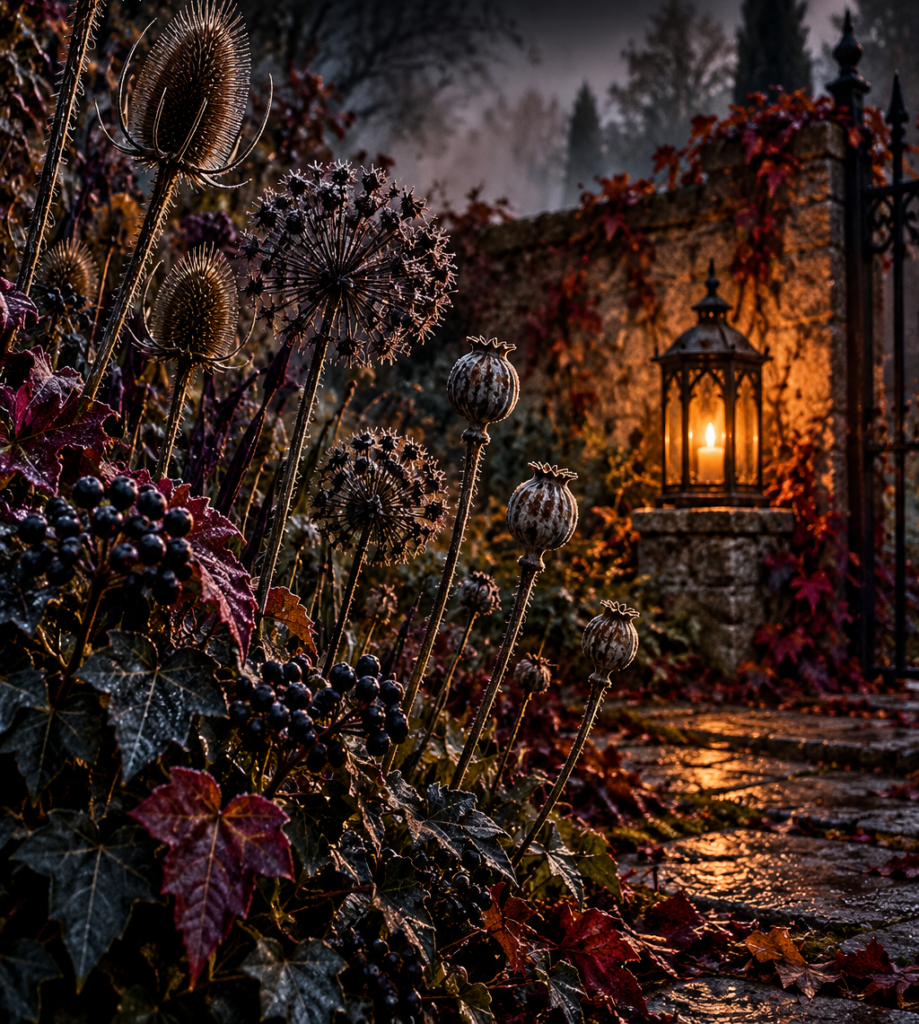
🍂 Why Autumn Suits the Gothic Garden
Summer gardens are about bloom. Autumn gardens are about silhouette, and silhouette is where gothic style lives.
A faded flower head has an outline that a fresh one never will. Spent blooms turn brown, bronze and charcoal, and they hold that shape through frost and rain.
Midnight Decor
3D printed gothic pieces
Darkly beautiful objects for the gothic home — printed fresh when you order. Each piece is conjured for your space and entirely yours.


This is also the season when the garden feels honest. Nothing is trying to be cheerful, and decay becomes part of the design rather than a problem to tidy away.
There is a practical bonus too. A garden that looks good in decline needs less intervention, so you spend the autumn admiring it rather than clearing it.
🌾 Seed Heads Worth Leaving Standing
The single best habit for a moody autumn garden is to stop cutting back too early. Standing seed heads give you texture, wildlife value and a frost-catching framework for months.
The RSPB recommends leaving seed heads standing because they feed birds when other food is scarce over winter, and the dead stems help shield the soil from frost. That makes the gothic choice and the sensible choice the same one.
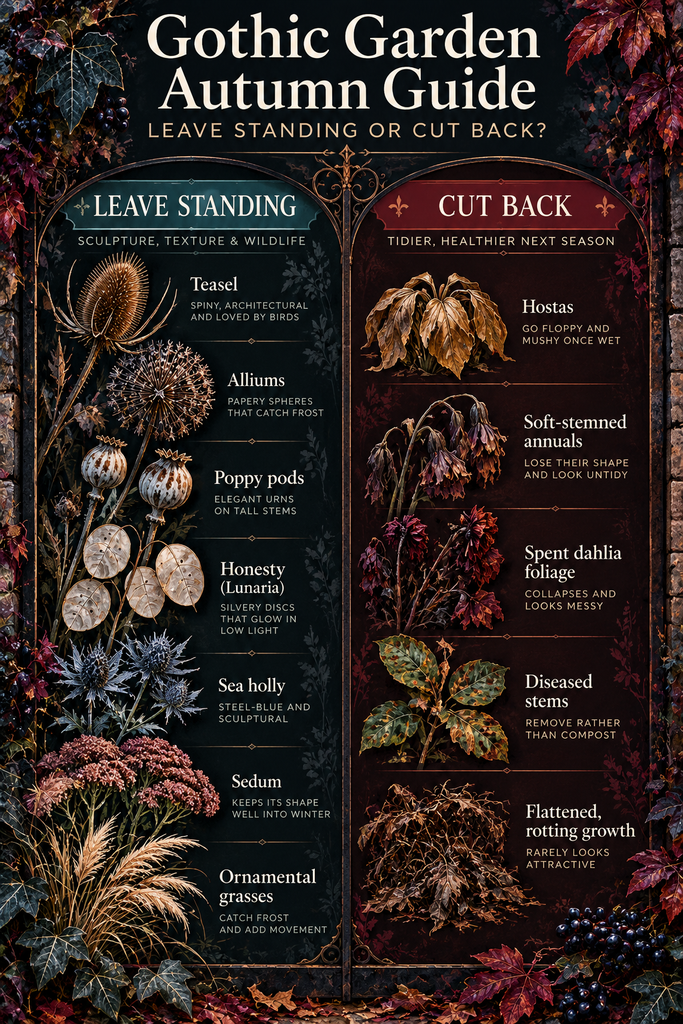
Here are the reliable performers, with the reason each one earns its spot:
- Teasel: spiny, architectural and sculptural, it looks as though it was designed for a ruined abbey. The RSPB notes that goldfinches eat teasel seeds.
- Alliums: the purple globes fade to papery, spiked spheres that look like tiny dark planets on sticks.
- Opium poppy pods: small grey-green urns on tall stems that rattle in the wind. They are among the most elegant seed heads you can grow.
- Honesty (Lunaria): the silvery, translucent discs glow in low autumn light and look like thin moons.
- Sea holly (Eryngium): steel-blue, spiky and metallic, even once the colour has gone.
- Sedum: the flat heads deepen from pink to a dark russet and keep their form well into winter.
- Ornamental grasses: they catch frost and low sun, and they move, which a still garden badly needs.
Each of these suits a different spot. Teasel and poppies work at the back of a border, while sedum and sea holly sit comfortably nearer the front.
What to Cut Back Instead
Not everything improves with age, so be selective. Some plants collapse into slimy mush once wet, and leaving them only looks neglected rather than intentional.
Cut back anything that has gone floppy and brown without holding a shape. Hostas, soft-stemmed annuals and spent dahlia foliage are common examples.
Remove diseased material too. Leaves with mildew or blackspot should go in the bin rather than the compost, so the problem doesn’t carry over to next year.
If a stem topples over, prop it up rather than removing it. A single leaning teasel can look dramatic, but a flattened clump rarely does.
🫐 Dark Berries and Fruit for Autumn Colour
Berries are the garden’s last bit of jewellery before winter. Black, deep purple and blue-black fruit looks fantastic against rust-coloured leaves and pale stone.
A clear caution first. Many ornamental berries, including ivy and several shrub berries, can make people and pets ill, so treat every berry in your garden as decorative and never as something to eat. The RHS lists ivy among its potentially harmful garden plants, and its simple rule is: if it is not a food plant, do not eat it.
This post is about looks and wildlife, not foraging. The same RHS page explains what to do if someone, or a pet, eats part of a doubtful plant, so it is worth reading before you plant anything with berries.
With that said, these are worth knowing about:
- Ivy: the late-flowering ivy that bears black berries is one of the best wildlife plants in a gothic garden. The RHS notes that its late flowers are an invaluable source of nectar and pollen for insects, and that the berries are much appreciated by birds in midwinter. The RSPB adds that ivy berries are richer in fat than most berries, which suits hungry birds. Wear gloves when handling it, as it can irritate skin. It also dresses a wall or fence in dark glossy green.
- Black elder: its leaves are deep purple and the berry clusters hang on dark red stalks. Cultivars such as ‘Black Lace’ are popular for exactly that look.
- Viburnum tinus: an evergreen that works as year-round structure, with metallic blue-black berries that follow the flowers.
- Mahonia: bold, spiky leaves and clusters of dusky blue berries make it feel properly prehistoric and a little menacing.
Plant these where they can be seen from a window. A dark berry on a dark day is easy to miss if it sits at the back of a hedge.
Wildlife will take care of the fruit for you. Leave the berries on, and watch thrushes and blackbirds turn your shrubs into a feeding station.
If you want more dark plant ideas to go with these, our guides to the best dark plants for a gothic garden and night garden plants cover foliage and flowers that sit well alongside autumn fruit.
🕯️ Staging the Moody Look
Plants provide the bones, but staging provides the atmosphere. Autumn gives you a head start because low sun, cool light and early dark do much of the work.
Work With Mist, Frost and Low Light
On a frosty morning, seed heads turn into drawings. Alliums, teasels and grasses all pick up a white edge that makes them look hand-inked.
Mist does something similar from a distance. It softens the background so that dark shapes stand out, and it makes even a small garden feel larger and more mysterious.
Position matters here. Plant your best seed heads where the low morning or evening sun will backlight them, because a backlit teasel looks very different from a flat-lit one.
Use Silhouette Deliberately
Dark shapes read best against something lighter, so give them a backdrop. A pale rendered wall, a silvered fence or a sweep of grey gravel all make skeletal stems stand out.
Repetition helps as well. Three or five of the same seed head, spaced through a border, feels designed. One of everything feels like an accident.
Lanterns and Uplighting
Autumn evenings arrive early, so lighting becomes part of the design rather than an afterthought. A few warm points of light turn a modest plot into a stage set.
A weathered black iron lantern on a path or step gives you a candlelit glow. It also works in daylight, as a dark sculptural object among the fading planting.
Keep the light warm and low. Cool white LEDs flatten the atmosphere, whereas amber light makes dark foliage and berries look rich rather than dead.
If you want to point a small light at a seed head or a statue, uplighting from ground level throws long shadows up the wall behind. It is one of the quickest ways to make a corner feel theatrical.
Statues, Arches and Dark Containers
Hard landscaping holds the garden together once the planting thins out. A single focal point gives the eye somewhere to land, and autumn light flatters stone and iron.
A gothic garden statue set among seed heads and fallen leaves looks as if it has been there for a century. Moss and weather will only help, so don’t scrub it clean.
An arch does a similar job overhead. A wrought iron gothic garden arch frames a path and gives ivy or a late climber something to scramble over.
For more ideas on stone, iron and dark pots, our guide to gothic garden decor goes through the options in detail.
🪴 Balconies, Containers and Small Spaces
You don’t need a border to get the look. A balcony or courtyard can do autumn structure well, provided you plan for the limited space.
Choose a few strong shapes rather than many small ones. One large pot of grasses with a teasel or sedum beside it reads as far more deliberate than a crowd of tiny containers.
Dark containers help a great deal. A dark resin balcony planter is light, weatherproof and makes pale seed heads and grasses stand out sharply.
Containers dry out less in autumn, but they can become waterlogged. Make sure the drainage holes are clear, and lift pots slightly off the ground if you can.
Our guide to gothic garden ideas for small spaces covers balconies, courtyards and container planting in more depth.
🍃 Autumn Jobs That Set Up Next Year
The autumn garden is not only about looks. The work you do now decides how good the garden will be in spring and summer.
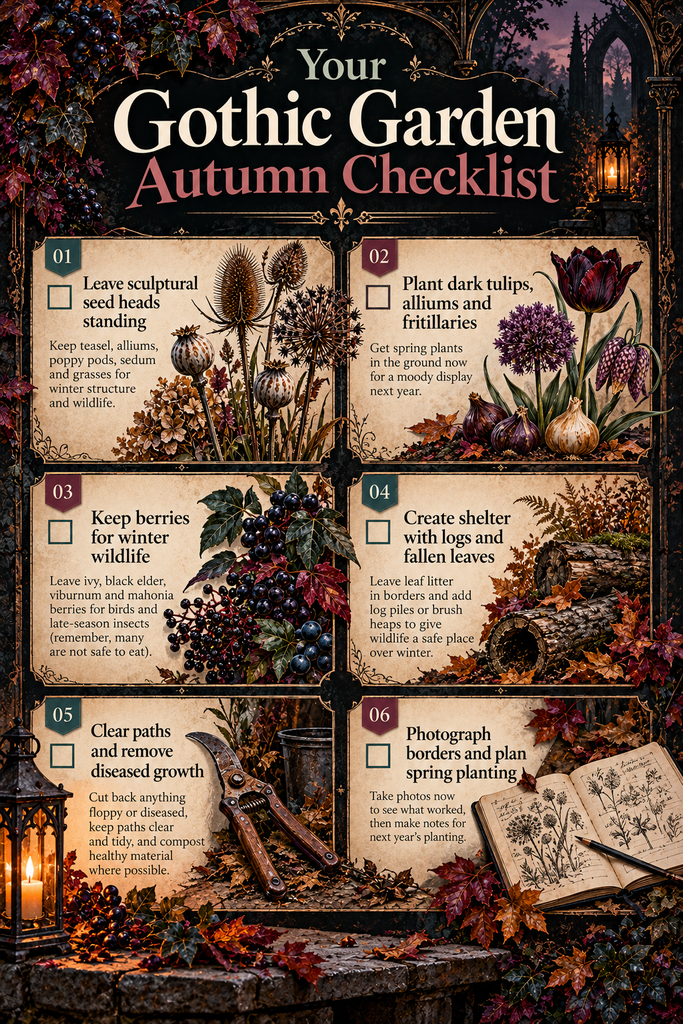
Plant Bulbs Now
Autumn is bulb time, and it is one of the most rewarding jobs in the garden. Planting now means the garden wakes up with something to show.
For a gothic palette, think deep purples and near-blacks. Dark tulips, alliums and fritillaries all do well from autumn planting, and the alliums will later give you next year’s seed heads.
Plant bulbs among perennials and grasses, so the foliage hides their fading leaves in late spring. Aim for groups of odd numbers, which look more natural than rows.
Leave Habitat for Wildlife
A gothic garden should feel slightly wild, and wildlife loves the same untidiness. Leaving stems, leaves and seed heads gives insects somewhere to overwinter and birds something to eat.
The RSPB’s advice is that you don’t have to clear everything away in autumn, because uncut plants shelter the insects that wrens and other birds eat. A pile of logs or leaves in a corner is a good shelter for hedgehogs and beneficial insects. It also looks suitably atmospheric when it is half-covered in moss.
If you want to give birds a drink as well as food, a dark resin birdbath works as both a sculptural feature and a water source. Keep it topped up and free of ice on cold mornings.
Tidy Selectively
You don’t have to leave everything. Clear leaves from lawns, paths and the crowns of delicate plants, but let them lie under shrubs where they act as mulch.
Cut back what has gone mushy, and keep what still holds a shape. A good rule is to ask whether it looks better standing or lying down.
Plan the Layers for Spring
Take photographs now, while the structure is visible. Gaps and weak areas show up clearly, and you can mark them for bulbs, grasses or shrubs.
Write down which seed heads performed and which collapsed. That list will make next year’s planting much better.
For a wider view of how all of this fits together, our complete gothic garden guide pulls the dark planting, structure and mood into one place. If you also enjoy bringing the season indoors, gothic autumn decor carries the same palette through to your rooms.
🖤 Frequently Asked Questions
Should I really leave my garden messy over winter?
Yes, within reason. Standing stems and seed heads feed birds, shelter insects and look wonderful in frost. Tidy paths and edges, and let the rest stand.
When should I cut back the seed heads?
Late winter or early spring is the usual time, before new growth starts. By then the seed has been eaten or has dropped, and the stems are easier to remove.
Are dark berries safe to have in a garden with pets or children?
Many are not, so choose and place them with care. Treat every ornamental berry as unsafe to eat, and check any plant you’re unsure about against the RHS list of potentially harmful garden plants before planting.
Can I get this look on a balcony?
Absolutely. A few large dark containers with grasses, sedum and a lantern create the same effect in a fraction of the space.
What is the easiest first step?
Leave one border uncut this year. Watch what happens with frost, birds and low light, and you’ll quickly see which plants you want more of.
🌒 Final Thoughts
The gothic garden does not end in autumn, it simply gets better at being itself. Seed heads, dark berries and strong silhouettes carry the mood until the first bulbs push through.
Leave more standing than feels comfortable, light a lantern, and let the garden decay beautifully. By midwinter you will be glad you did.